Sijthoff
Reusing existing structures to create something new by transforming unused spaces into additional apartments in busy cities.
INTRODUCTION
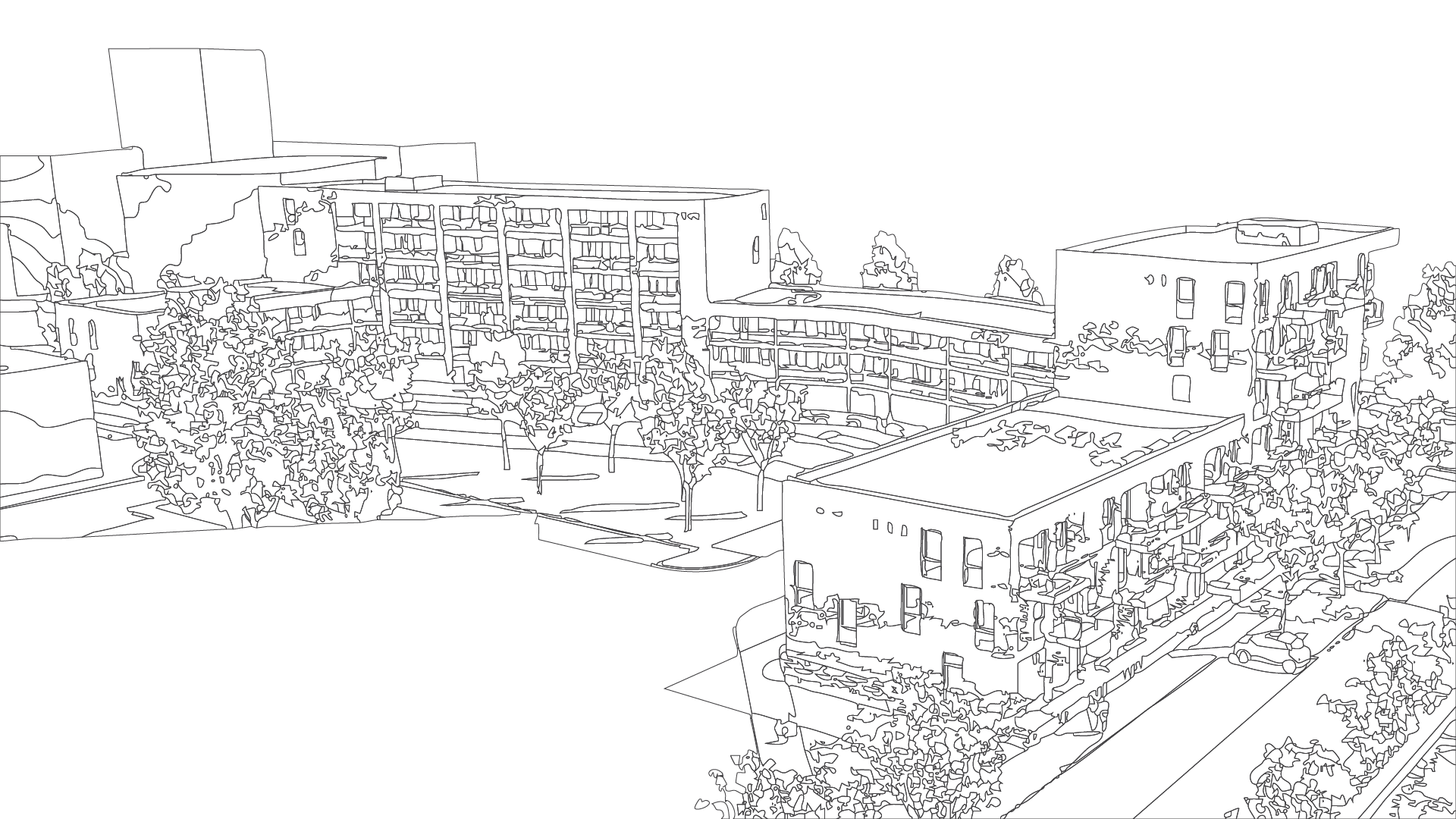
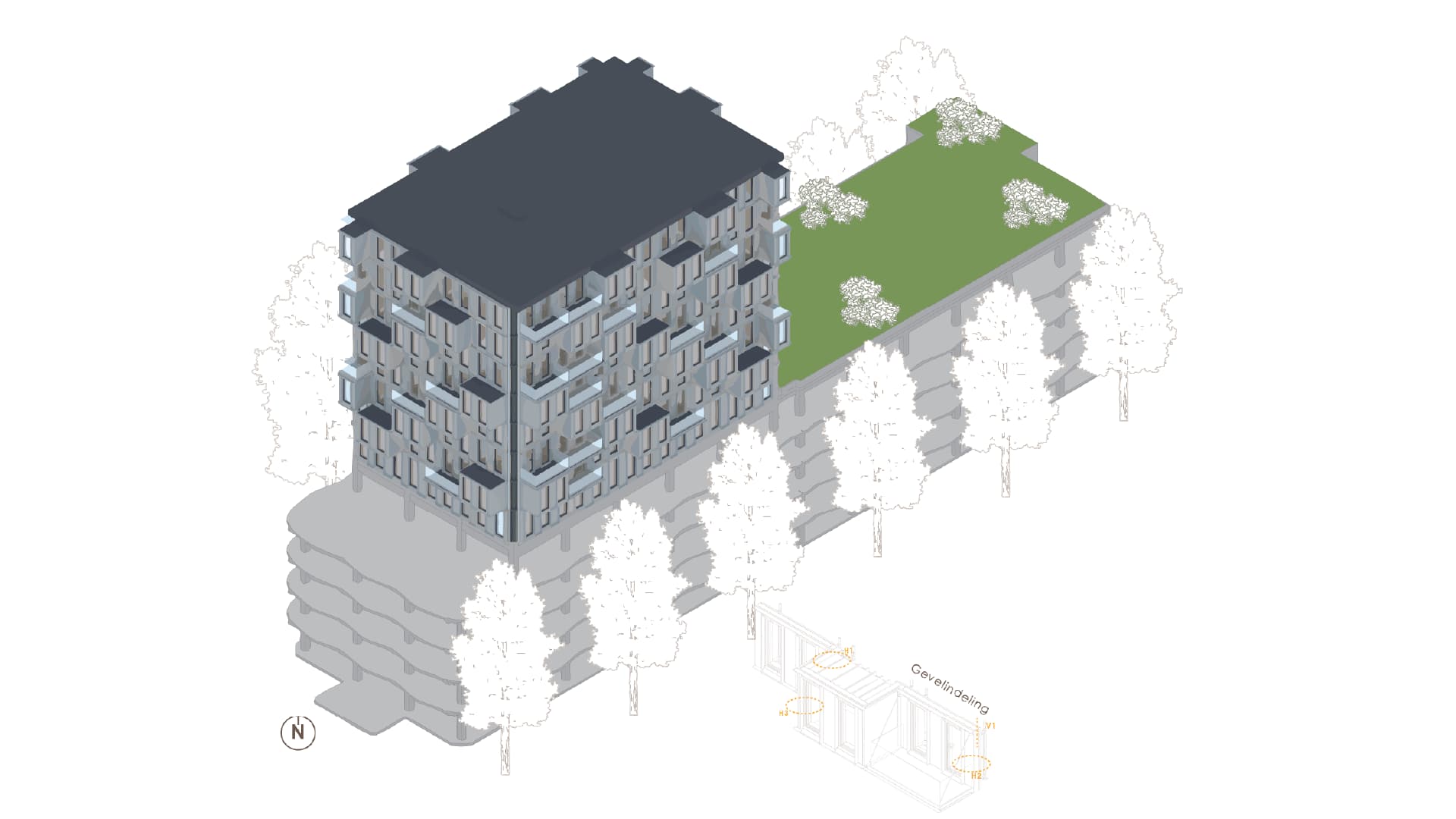
The Netherlands is facing a serious housing shortage, especially in major cities. At the same time, these cities struggle with another issue: many vacant and outdated office buildings that have been unused for years. A solution lies in repurposing these existing buildings and transforming them into residential spaces. This project focuses on the redevelopment of an old brutalist office building into an apartment complex.
Traditional construction methods cause significant air pollution, contributing to climate change and negatively affecting our living environment. Many emissions released during the building process are harmful to both people and the planet. By using more biobased materials, these emissions can be reduced. The construction sector needs innovative solutions to make building more sustainable and efficient. Using timber elements for walls, floors, and roofs can help create faster, more affordable, and healthier housing.
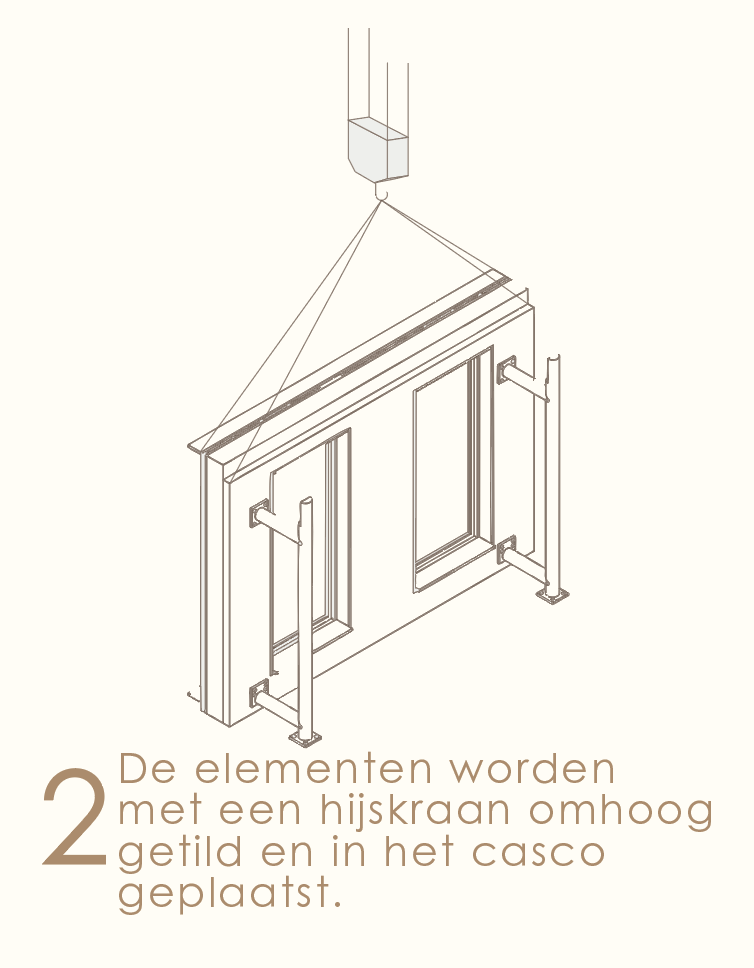
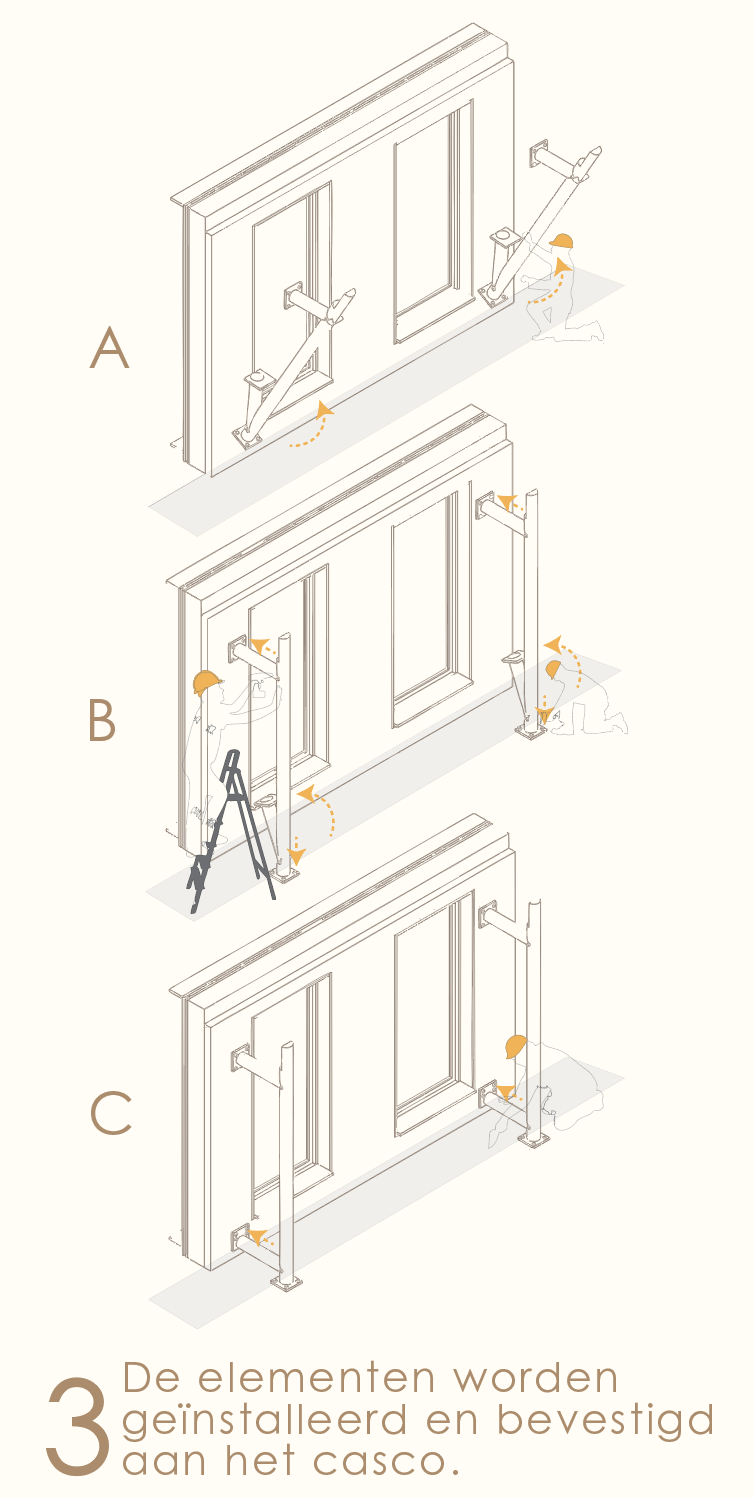
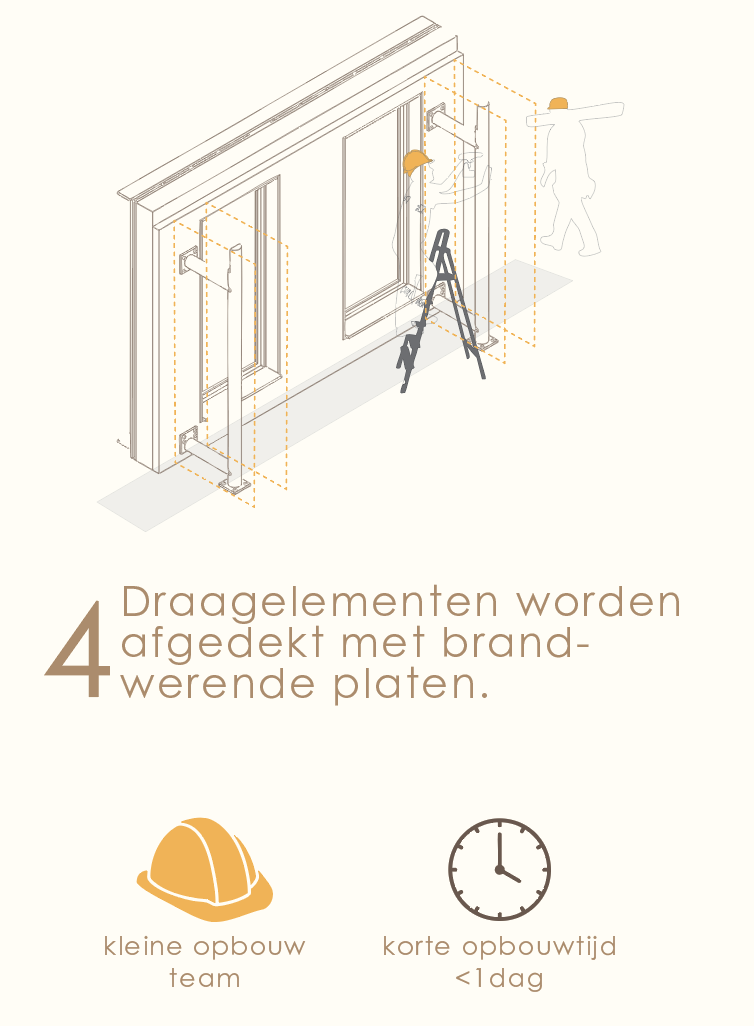
The primary objective of this project is to explore how vacant spaces in cities can be reused. The city of The Hague has many empty office buildings awaiting new functions, which are often demolished, resulting in large CO₂ emissions. One solution is to transform these buildings into housing. Working with prefabricated elements is an effective approach; however, this project presented a challenge. Scaffolding was not allowed, meaning that all fastening and air sealing had to be carried out from inside the building. In this project, I will guide you through my thought process and explain how I approached this problem.
ANALYSIS
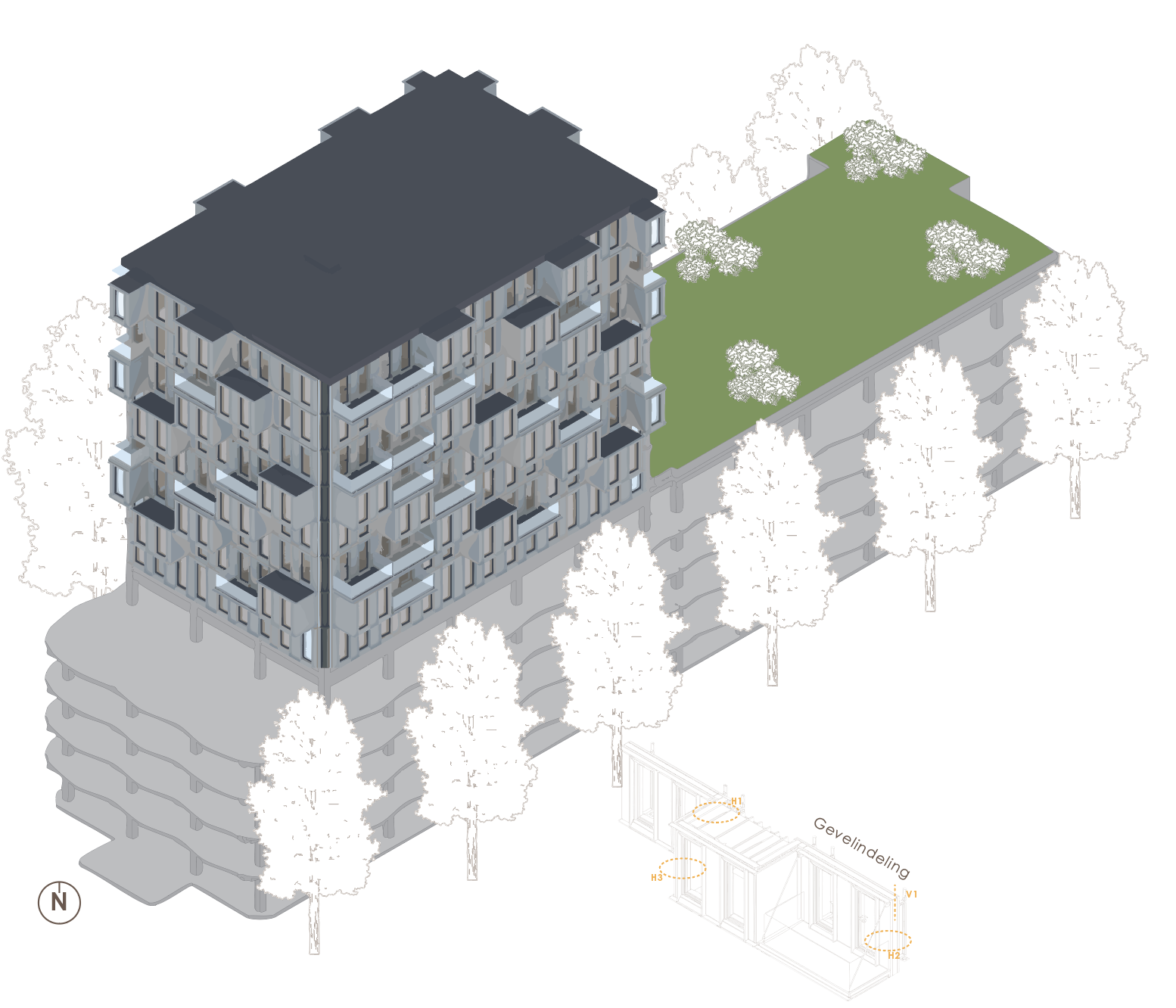
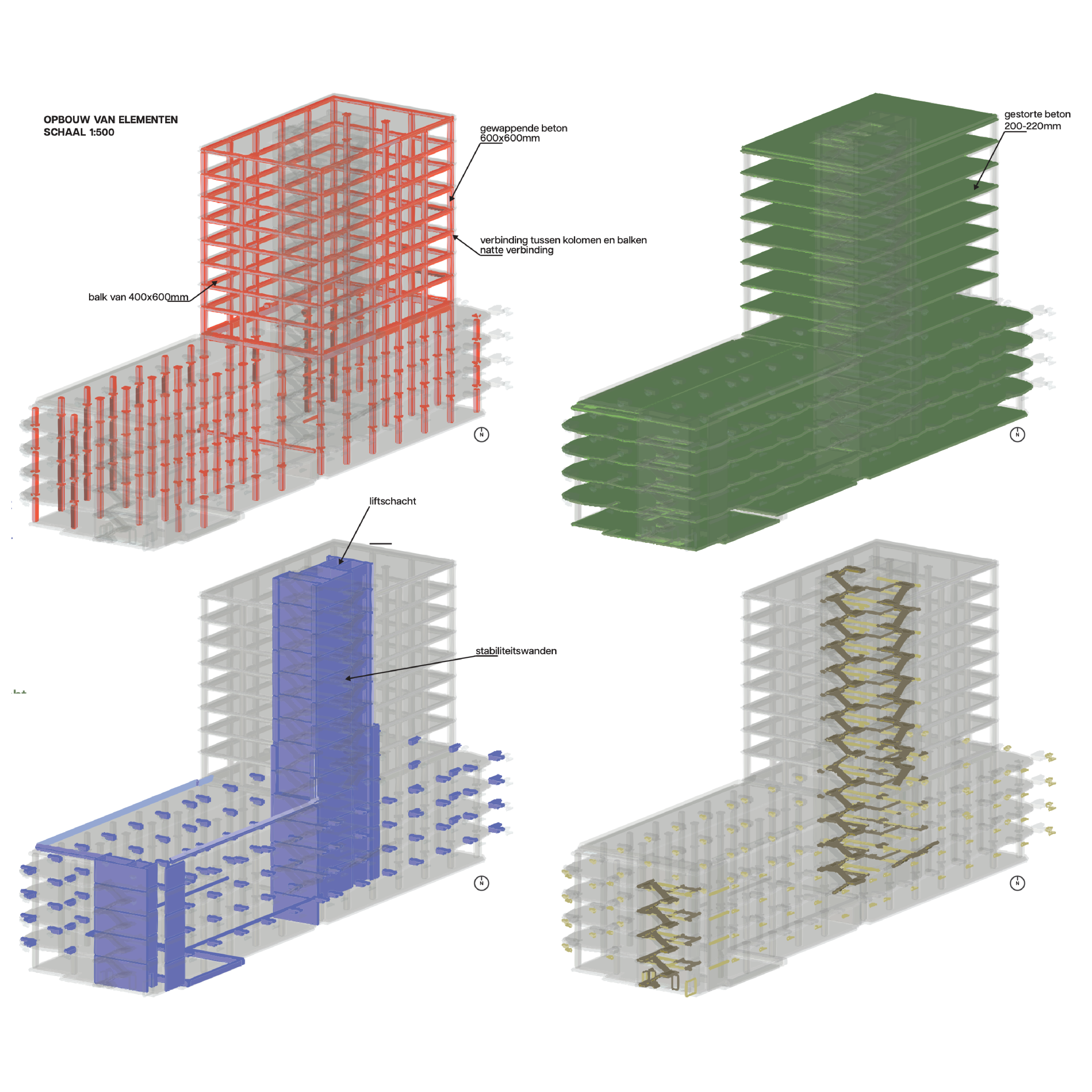
My analysis focused on archive drawings. I studied the existing building carefully to understand how the structure is put together. By examining the archive drawings in detail, I also started thinking about how the different connections might work. I find the wall finishes very unique and interesting. By preserving and reusing these wall elements in the transformation, we can reduce waste after renovation and maintain the historical value of the building. I collected all relevant information for our group, including the layout of the walls, their sequence, and the fragment composition. All necessary dimensions were clearly noted at the appropriate locations. The building is supported by concrete columns and pillars.
CONCEPT
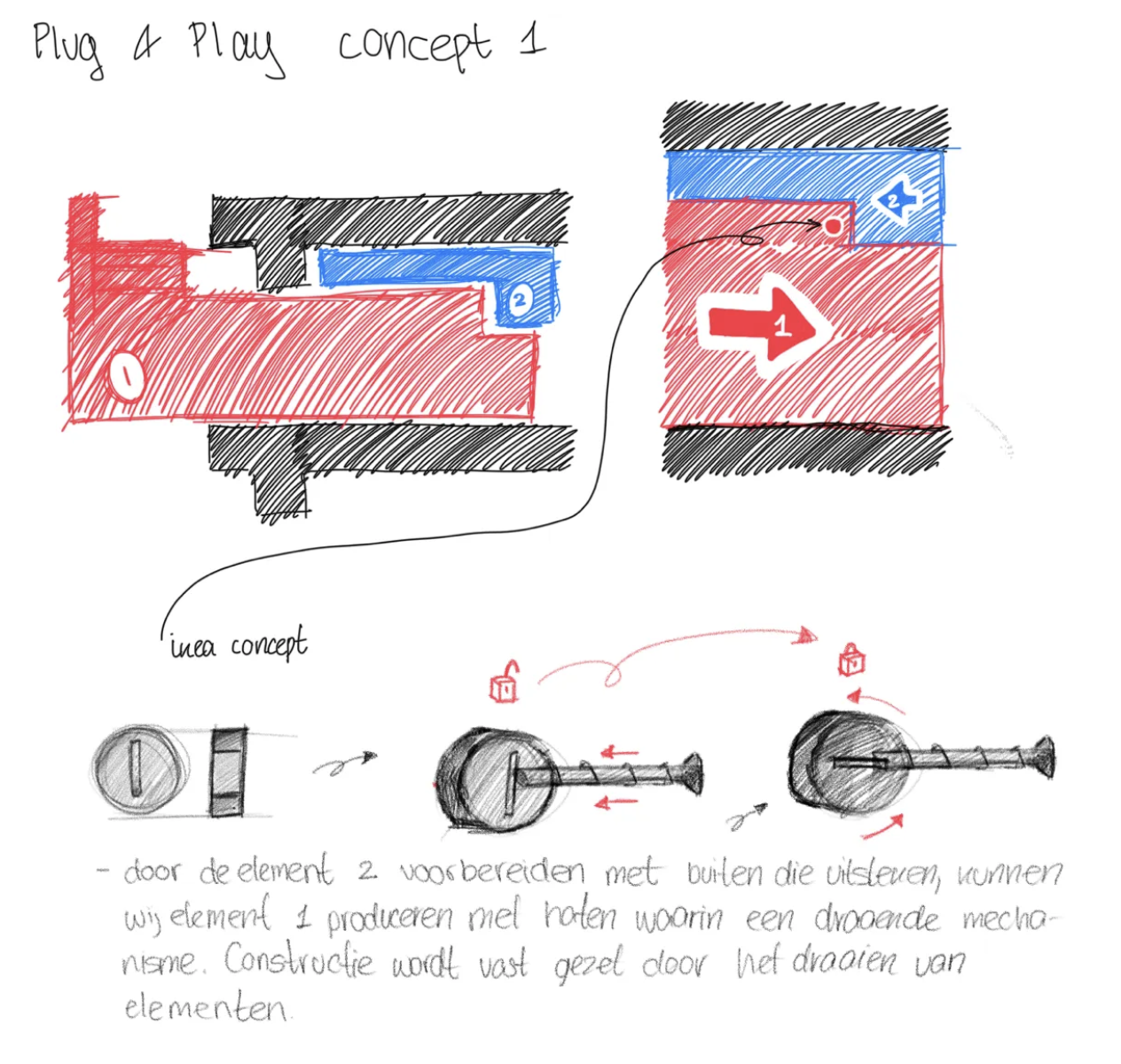
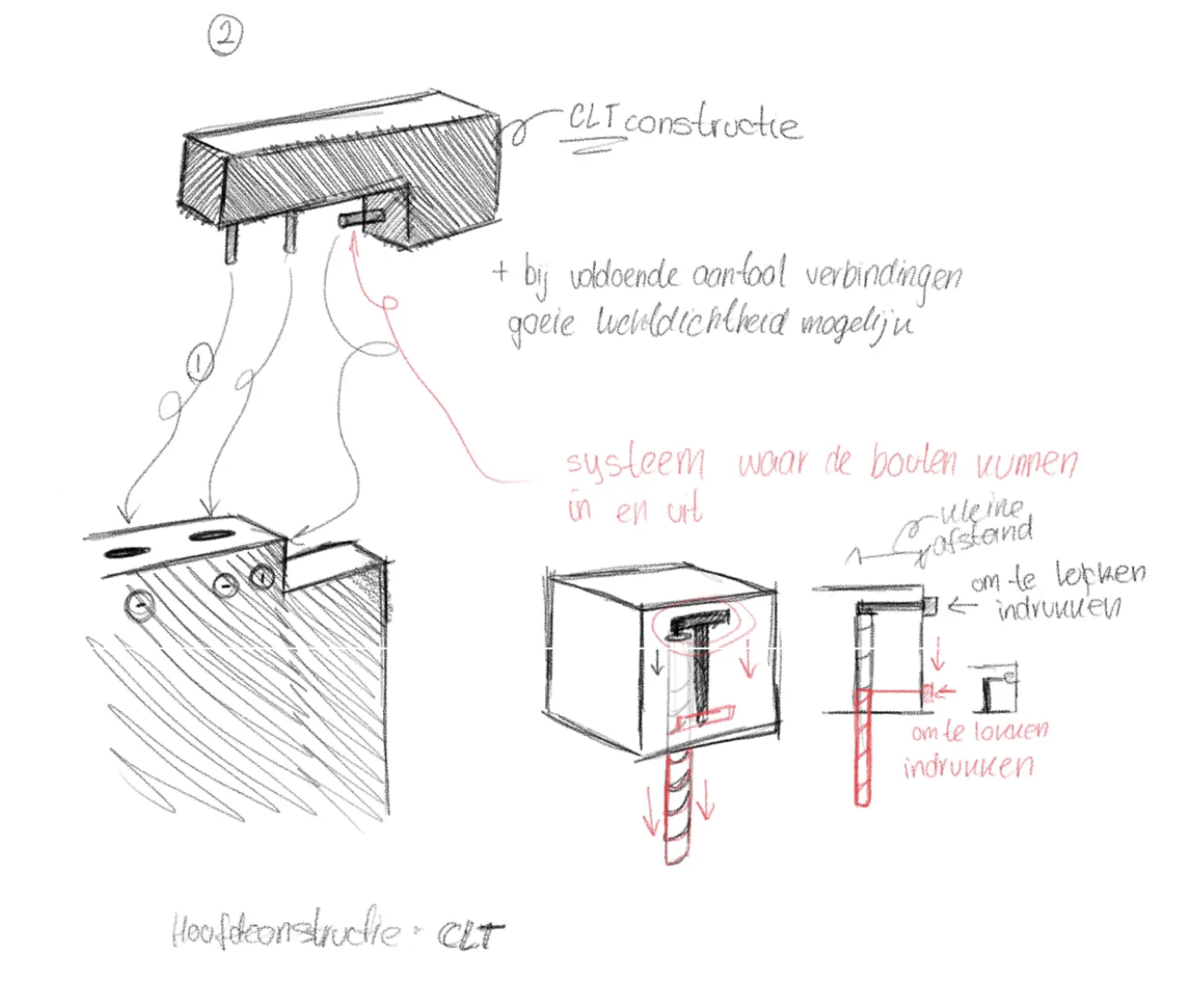
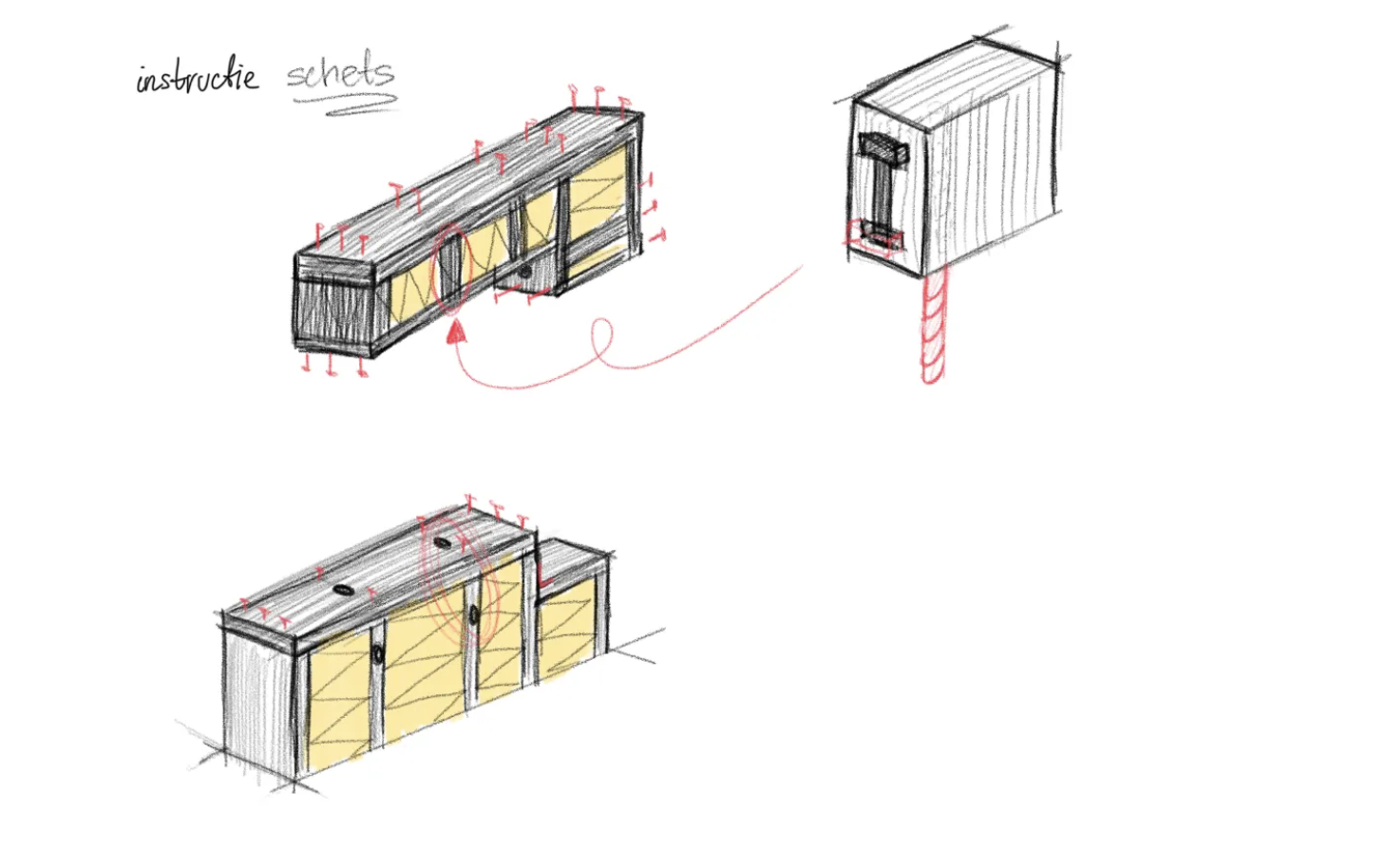
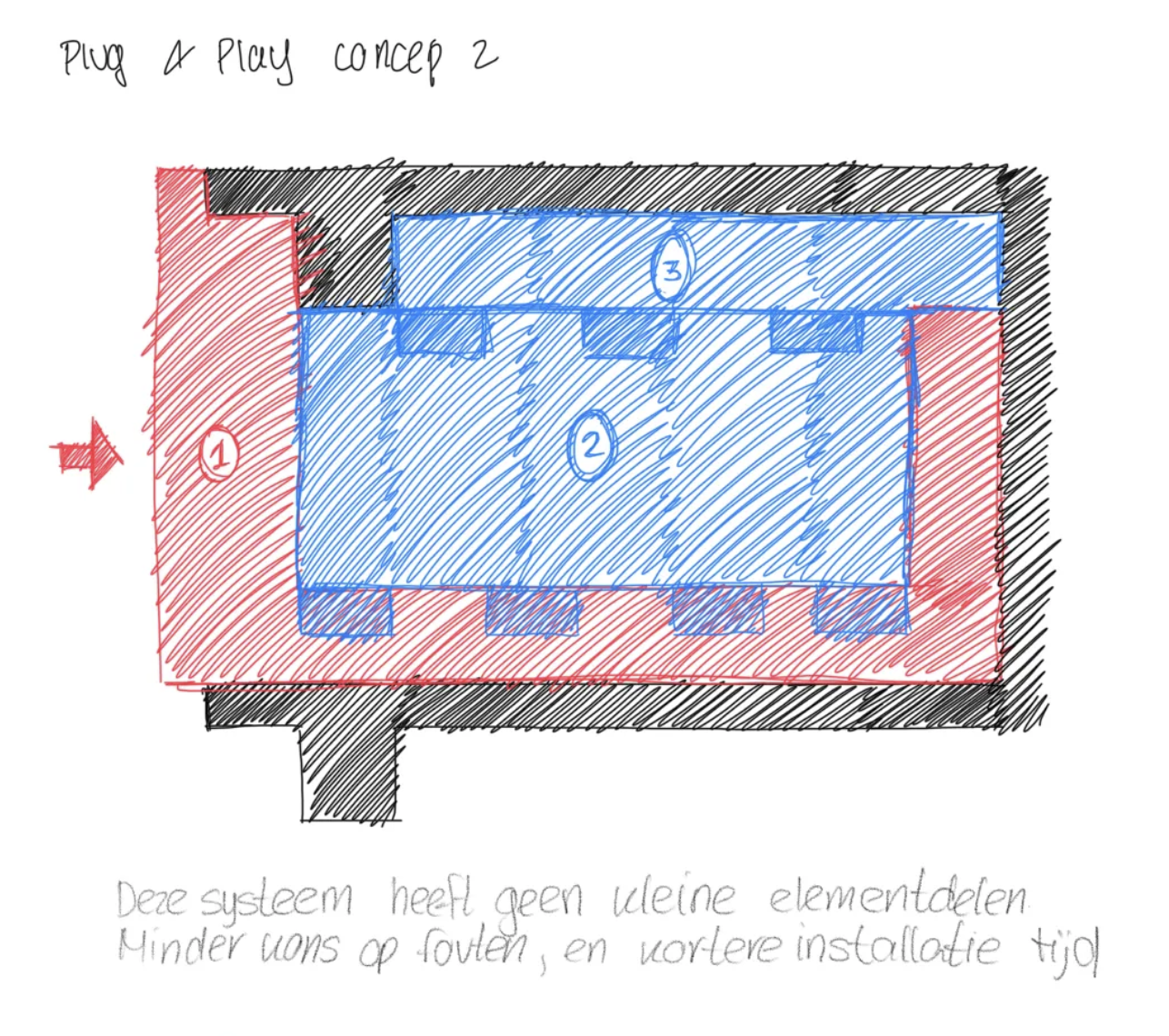
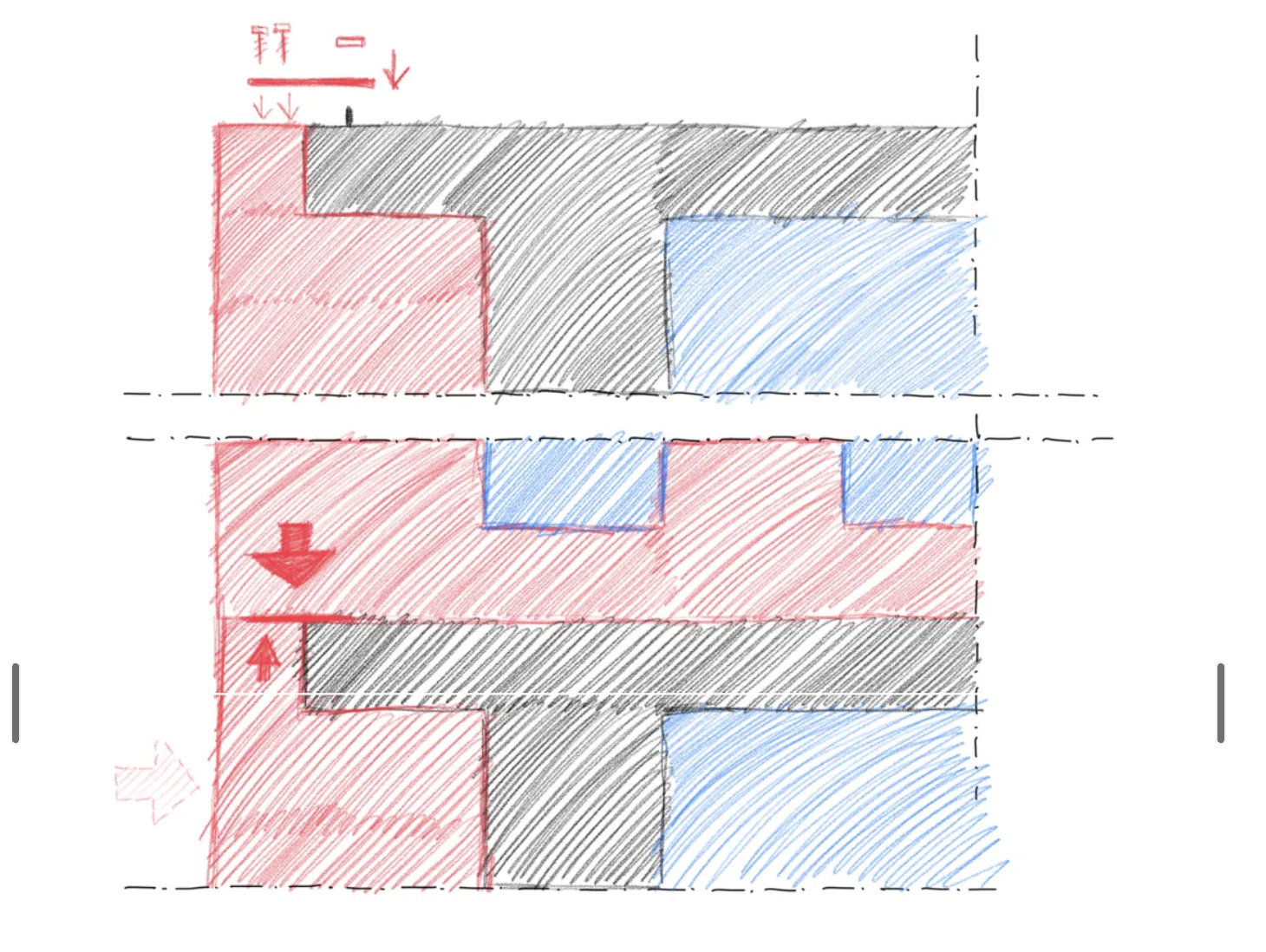
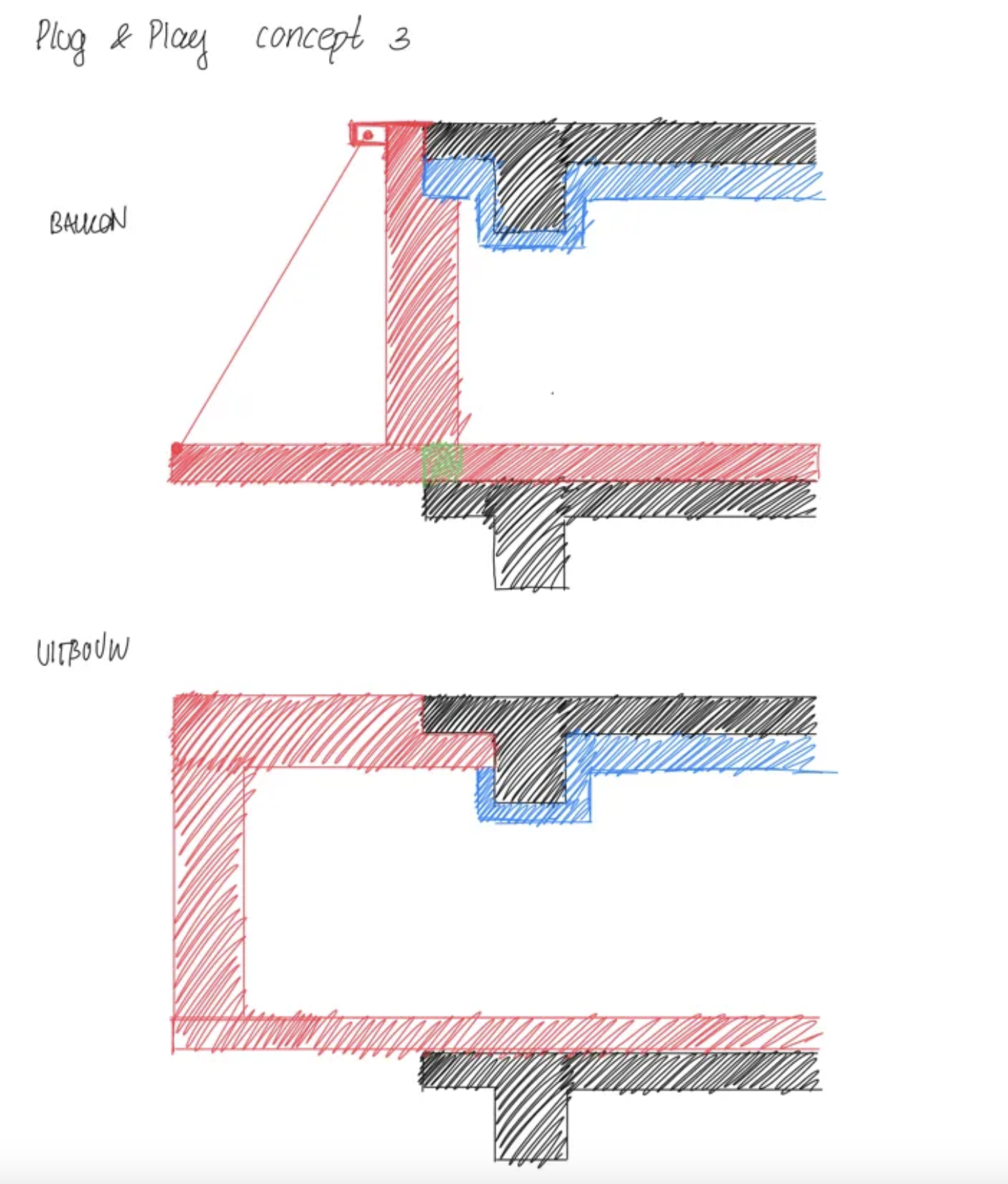
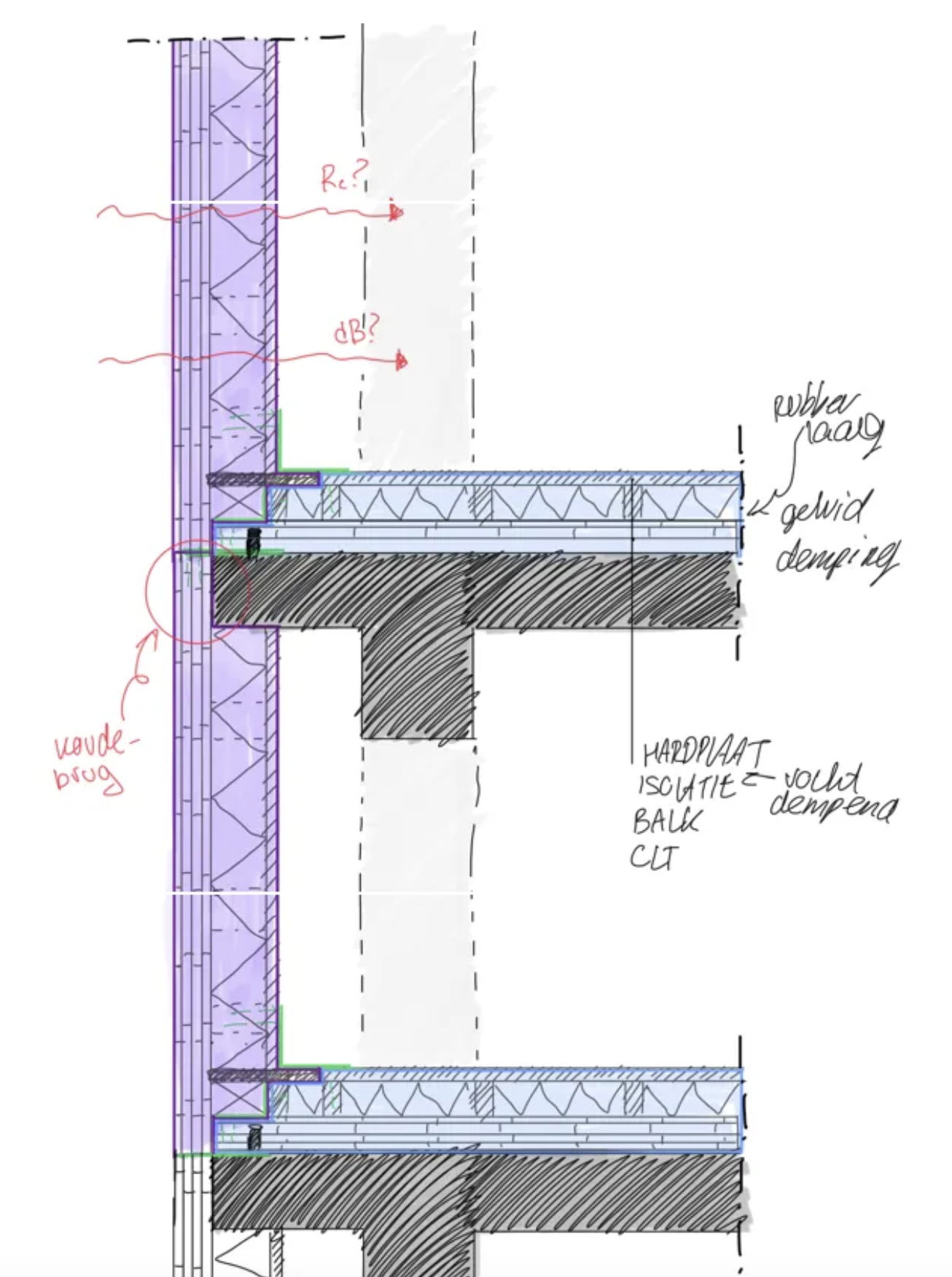
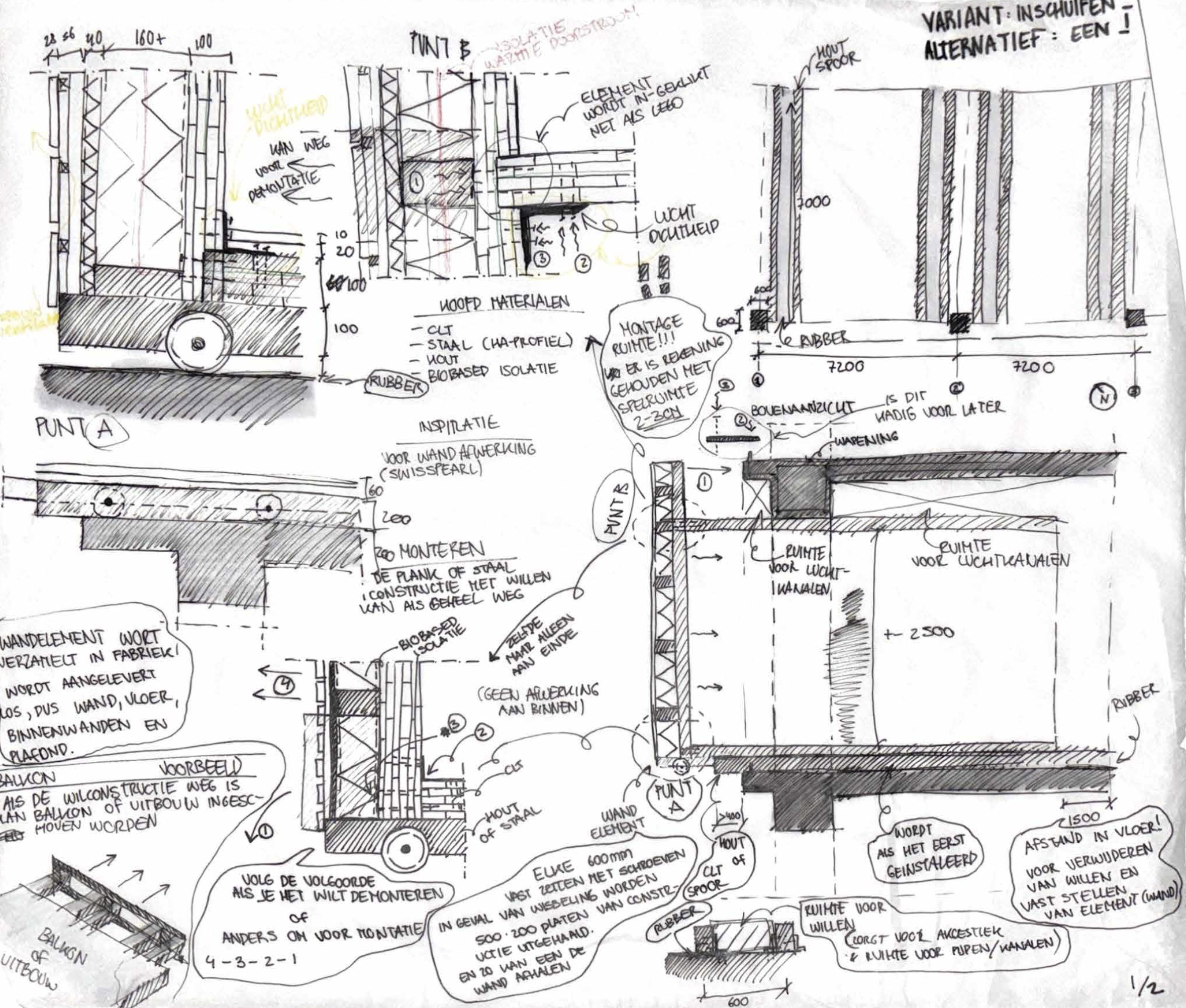
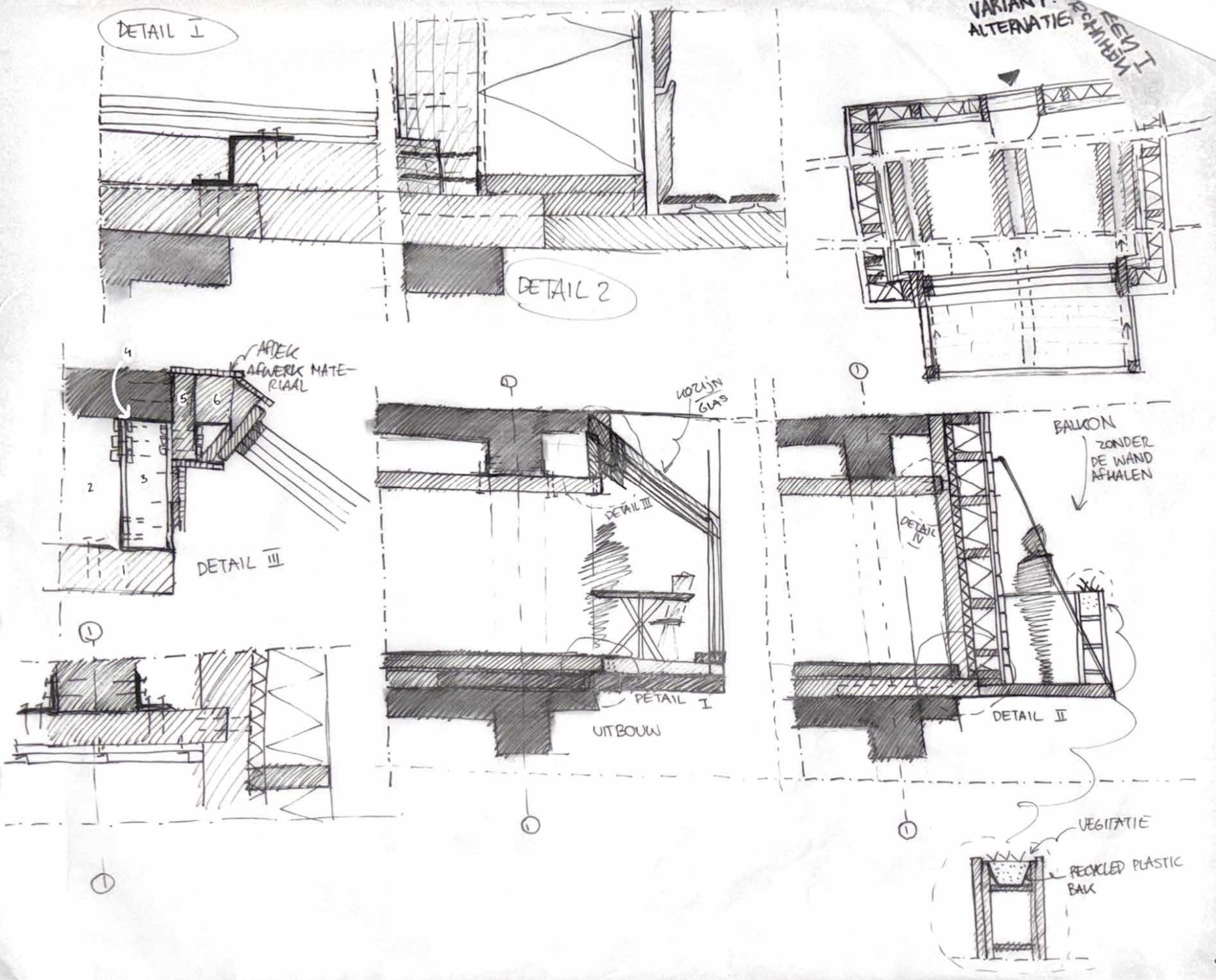
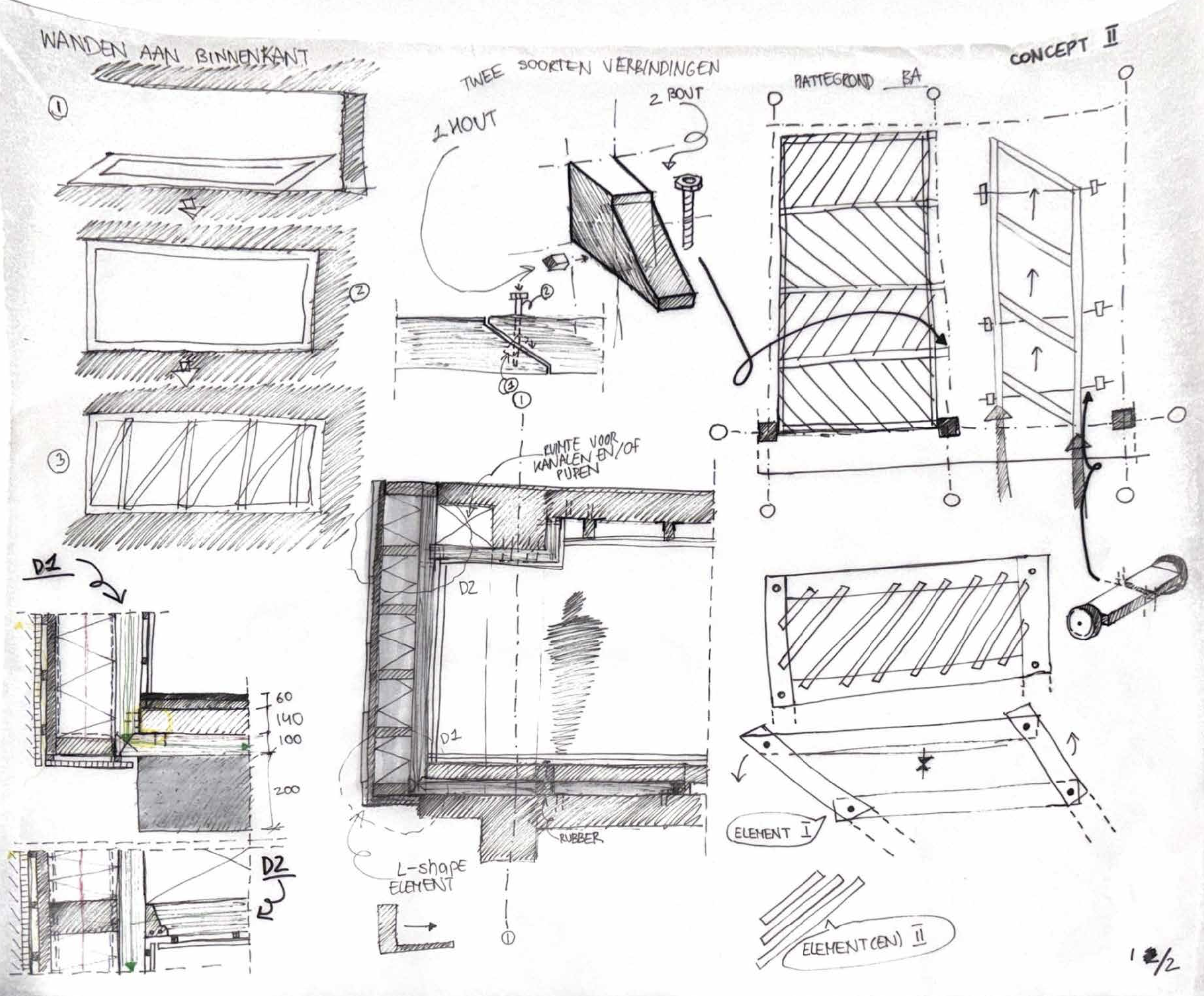
How can an element be attached to the main structure using dry connections? The elements must be replaceable without affecting or disturbing other components. My task was to select a suitable method and develop multiple variations. My assignment was to identify all potential issues that could arise when applying dry connections, using models and sketches. I produced many sketches in both 2D and 3D, including sections, assembly drawings, and situational sketches. Throughout this process, I continuously questioned whether my solutions actually solved the problem or made it worse. The outcomes of my sketches helped guide the development of our concept. The façade build-up I proposed was eventually incorporated into the final design. The sketching process helped me clearly identify the problem while also generating possible solutions. However, many solutions introduced new challenges. As a group, we applied a decision-making method to arrive at a well-considered final result.
DETAILS
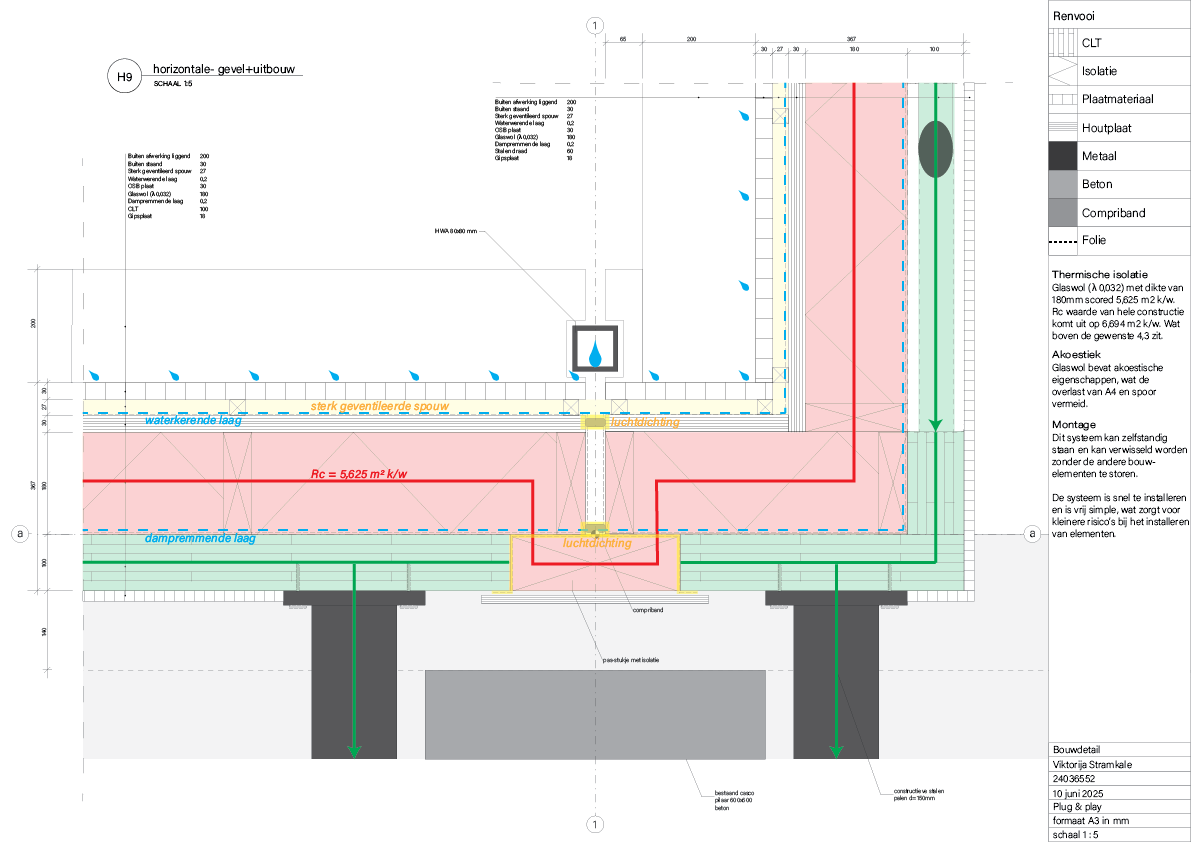
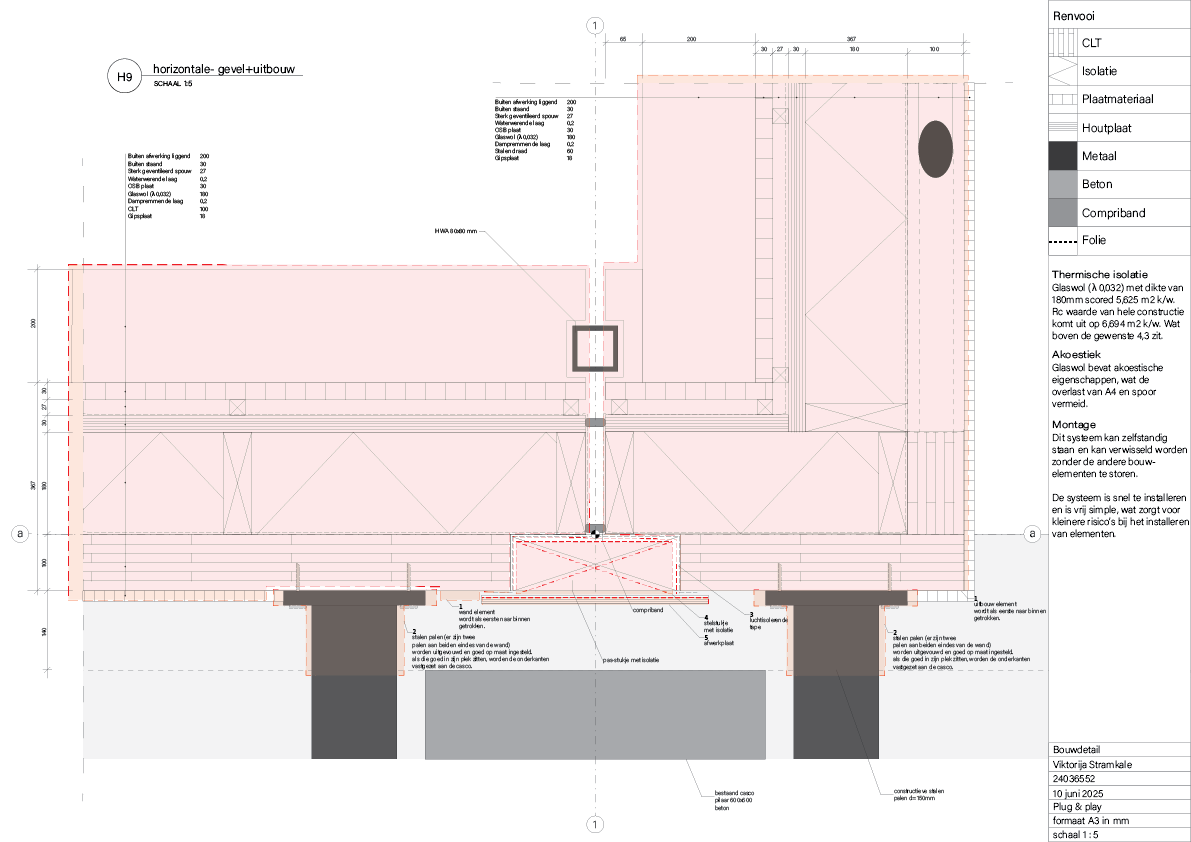
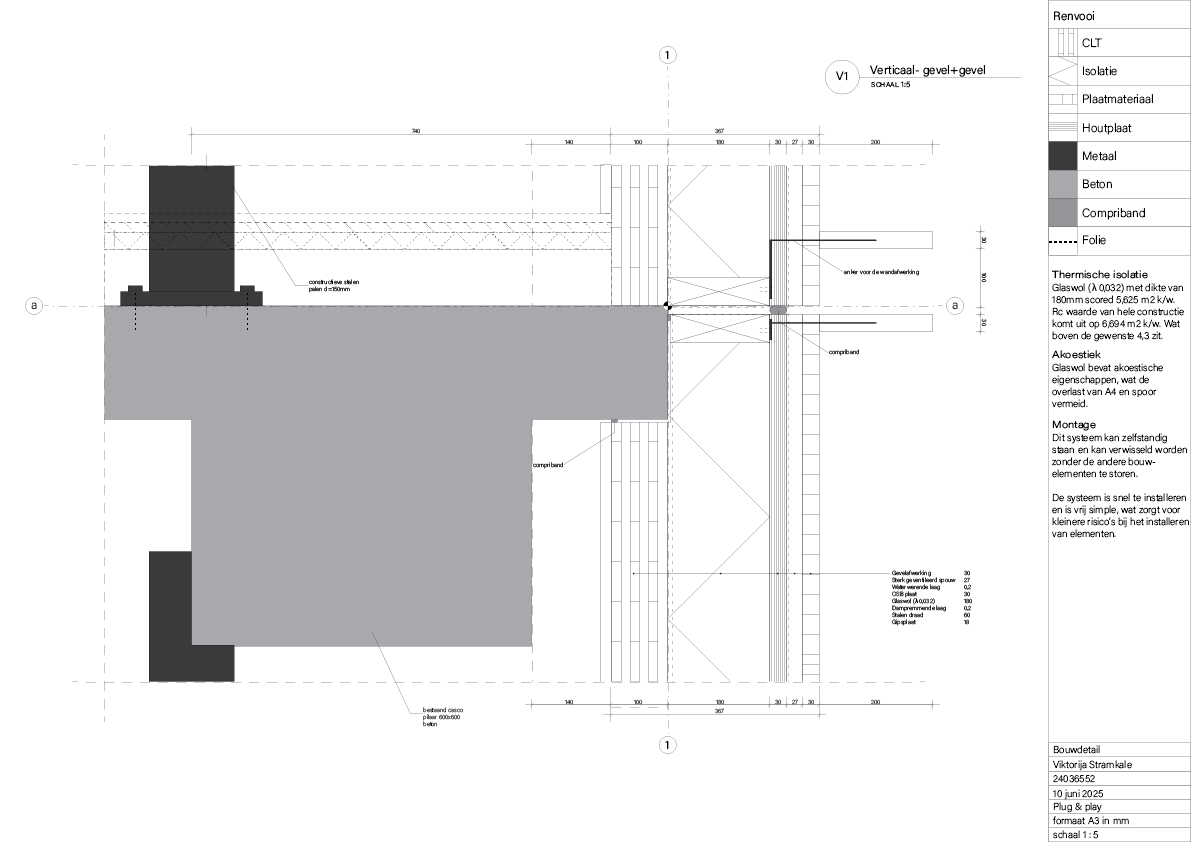
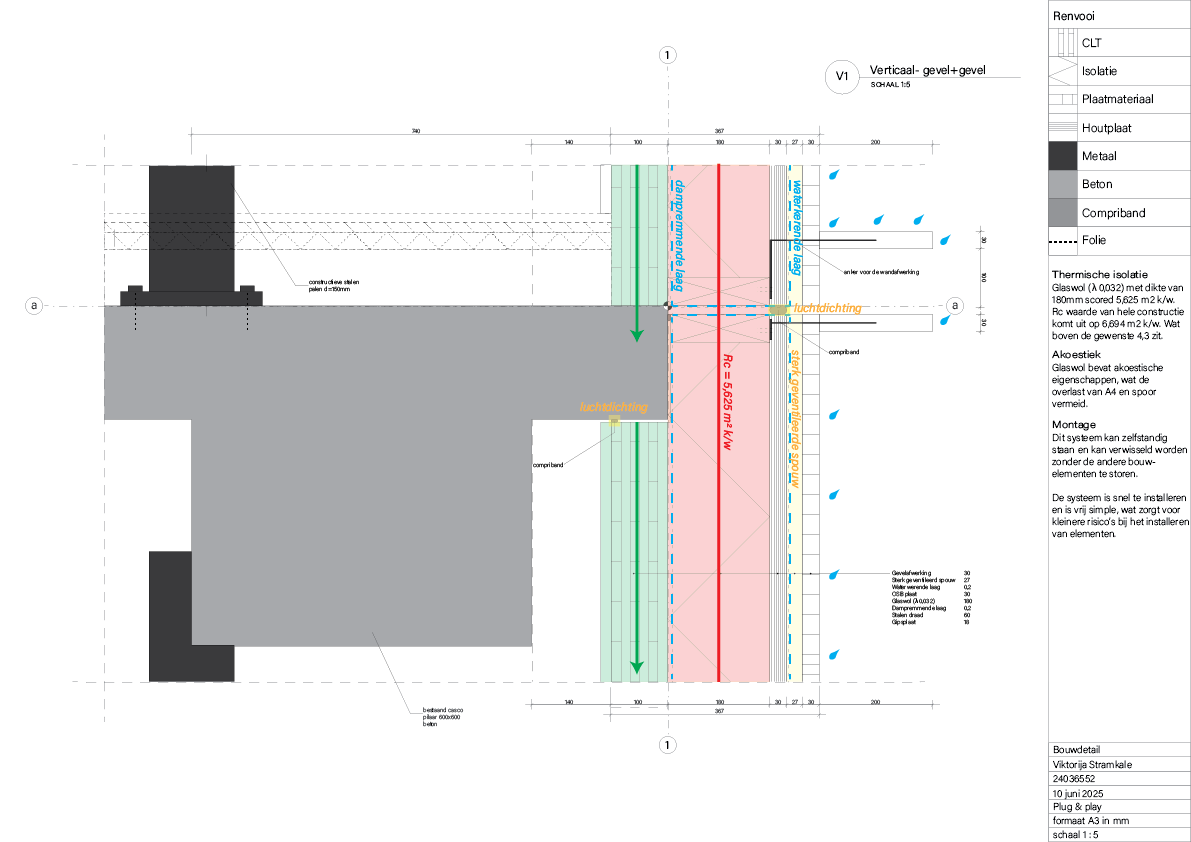
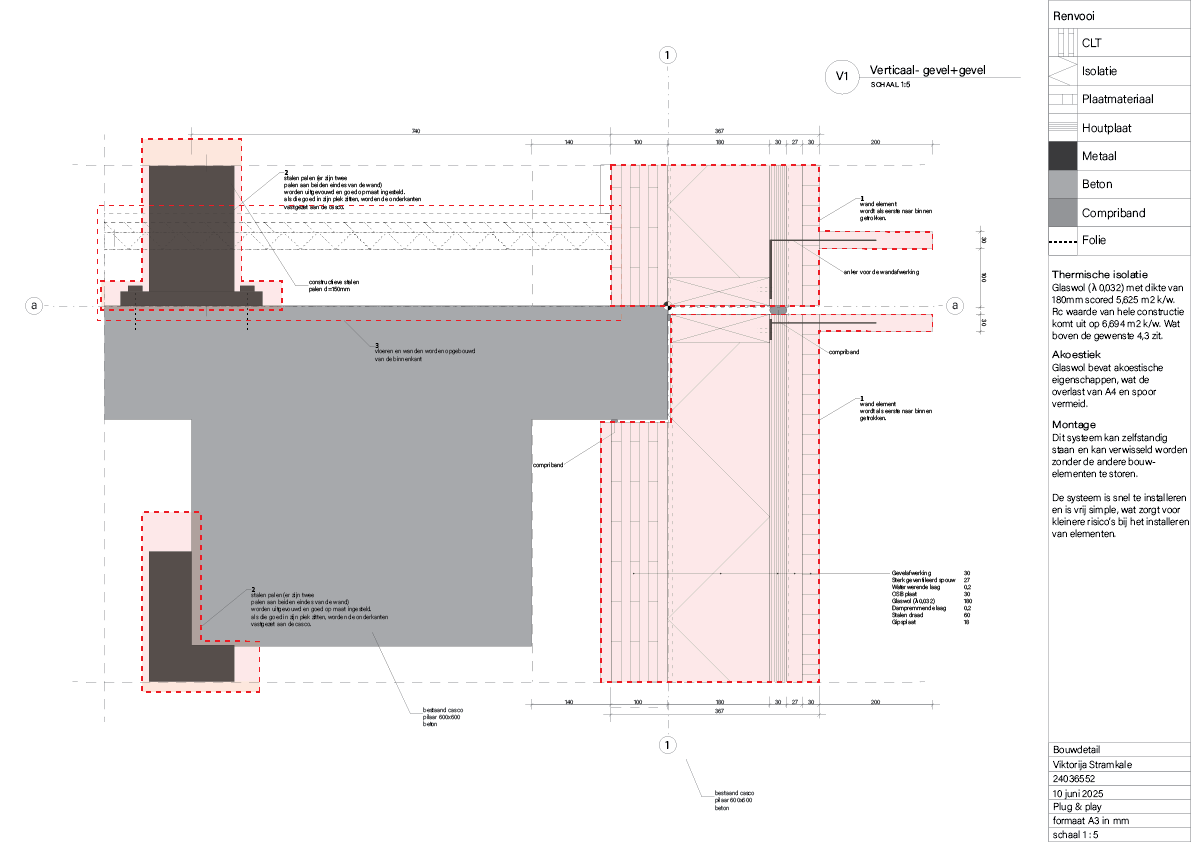
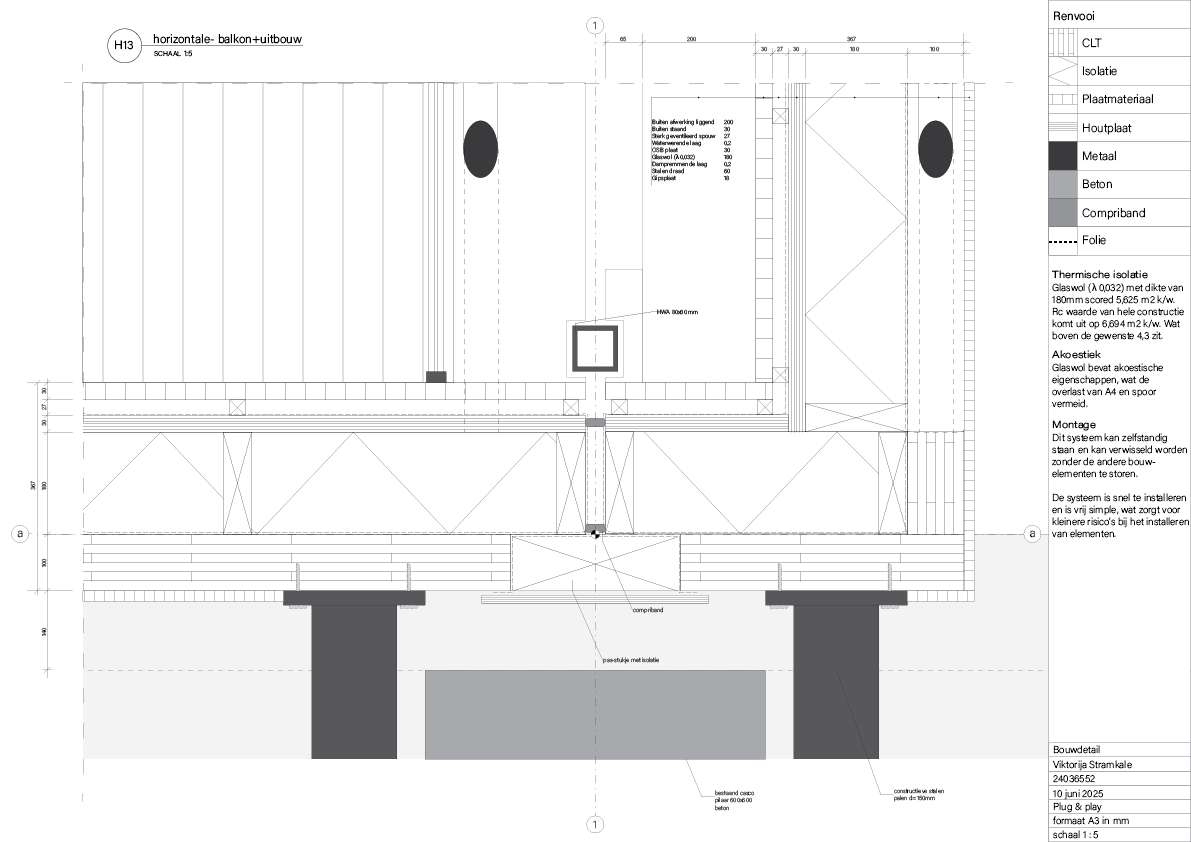
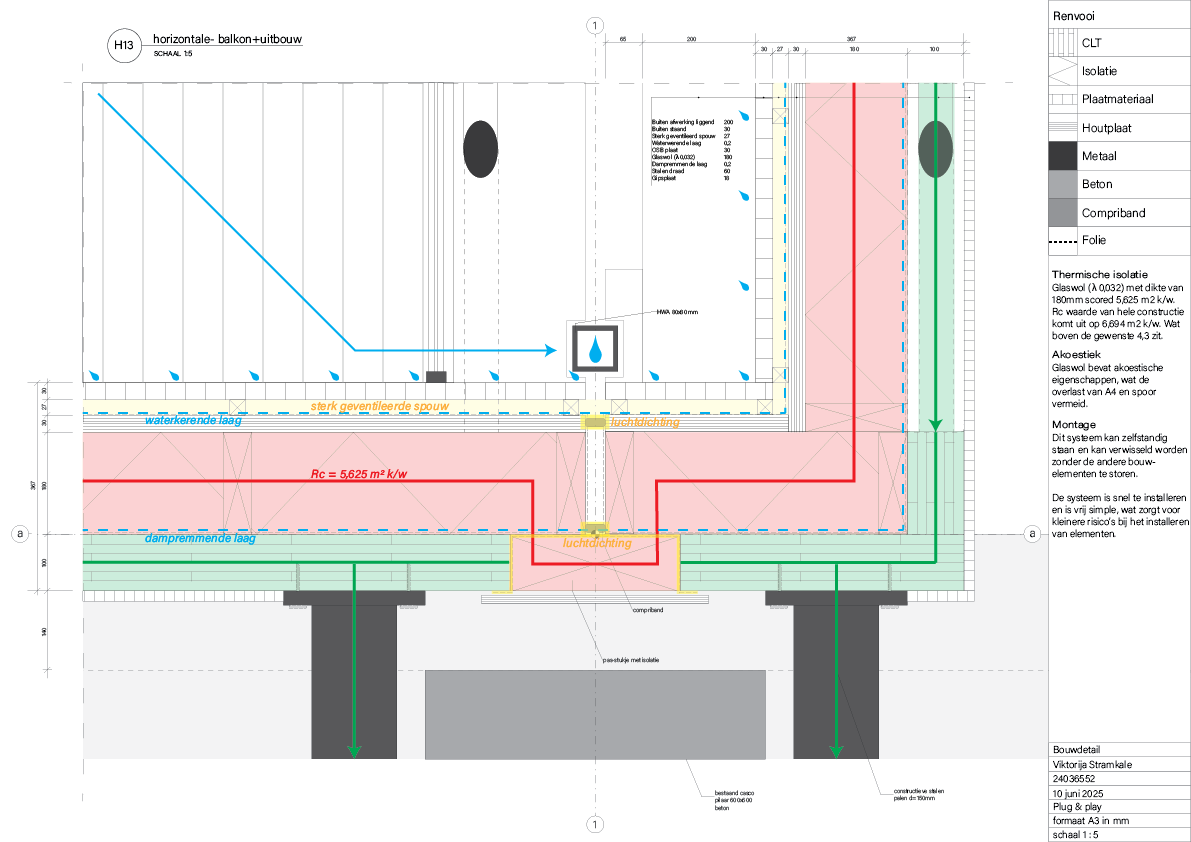
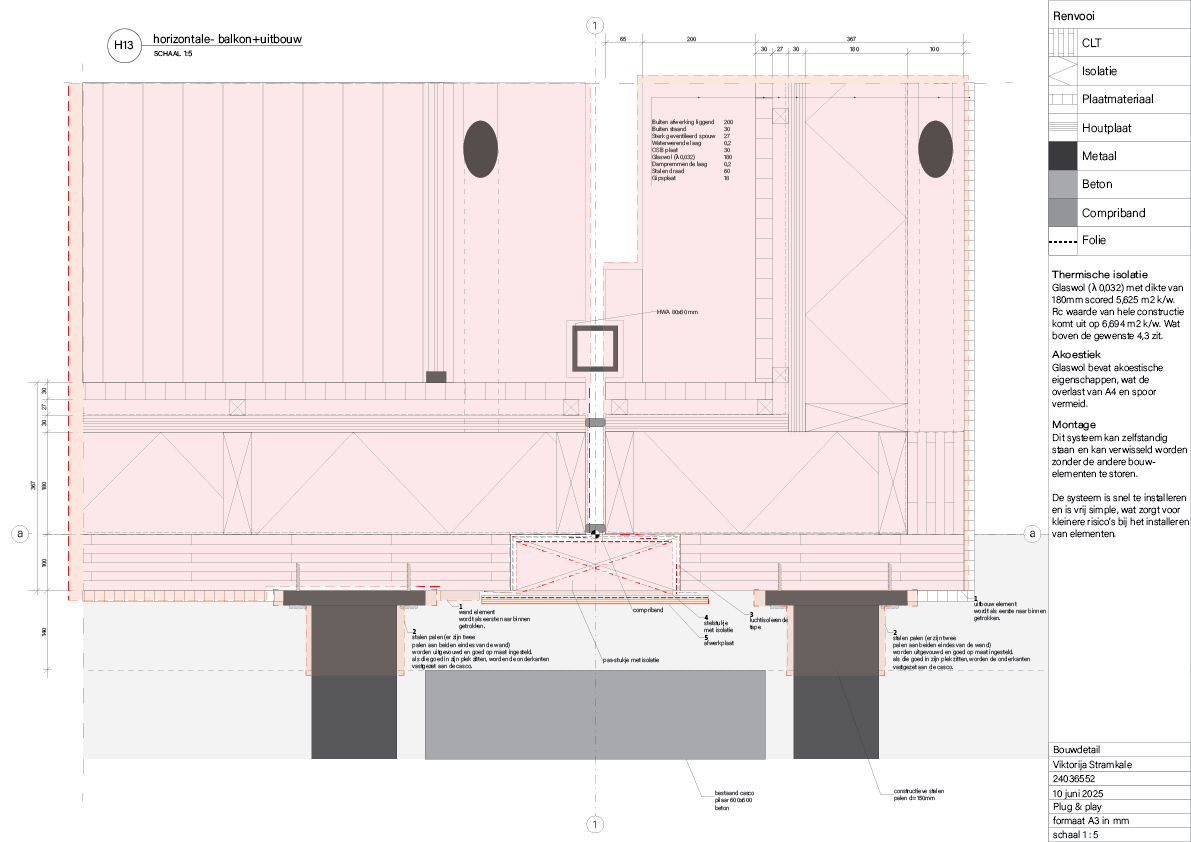
How do we seal the adjustment space between two building elements? How can we prevent thermal bridging and ensure good airtightness? My task was to develop a suitable sealing solution, using sketches and eventually a final drawing. I started by making many sketches to explore where gaps could theoretically occur. In consultation with tutors, we concluded that a gap would form between the elements. By reducing the thickness of the construction package, extra space was created between the element and the beams. This provided an opportunity to improve the sealing of the connection. By intentionally leaving a small gap between the two elements, we were able to first seal it with tape. Afterwards, insulation material was placed between the elements, and the connection was finished with a board. The final result is a drawing with a clear solution for sealing the vertical gaps that occur when connecting two elements. We identified this issue at an early stage, which made it relatively easy to develop a suitable solution during the design phase. Later design adjustments made the solution even simpler, ultimately leading to a well-resolved final detail.
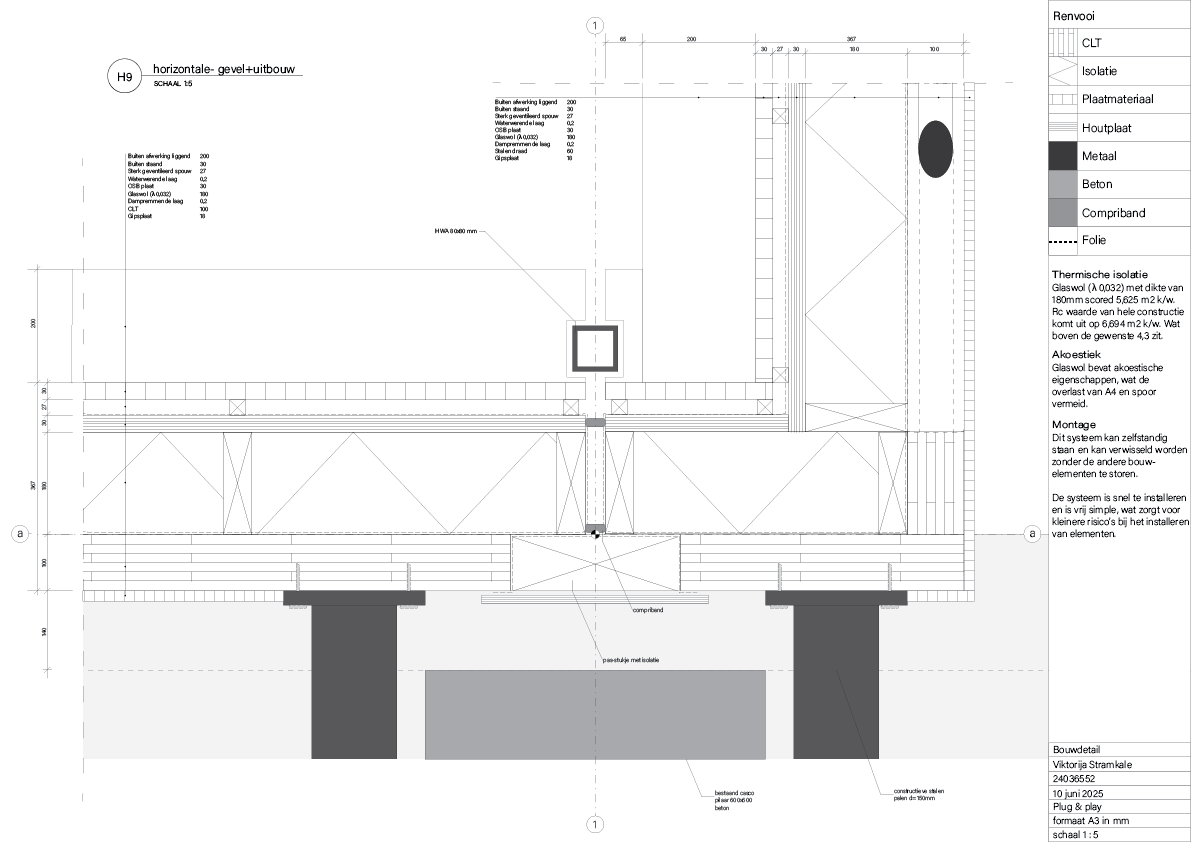
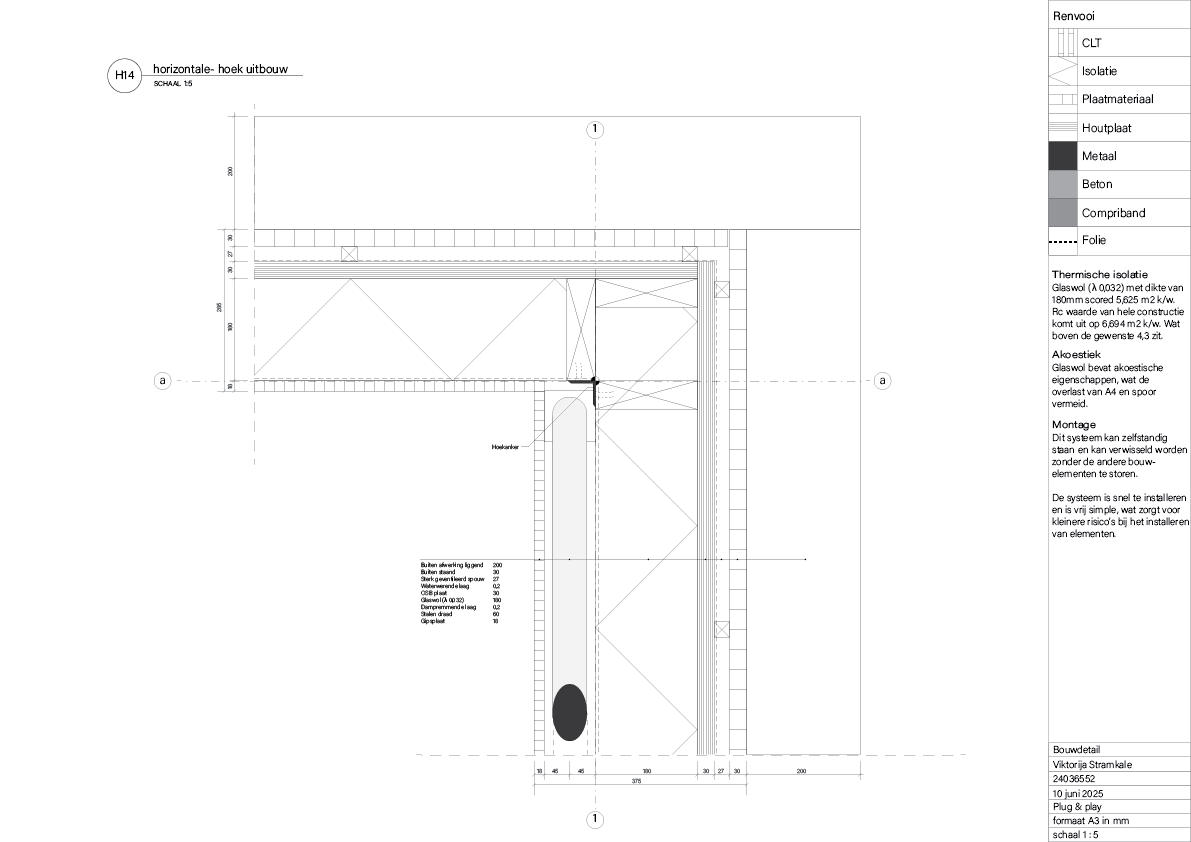
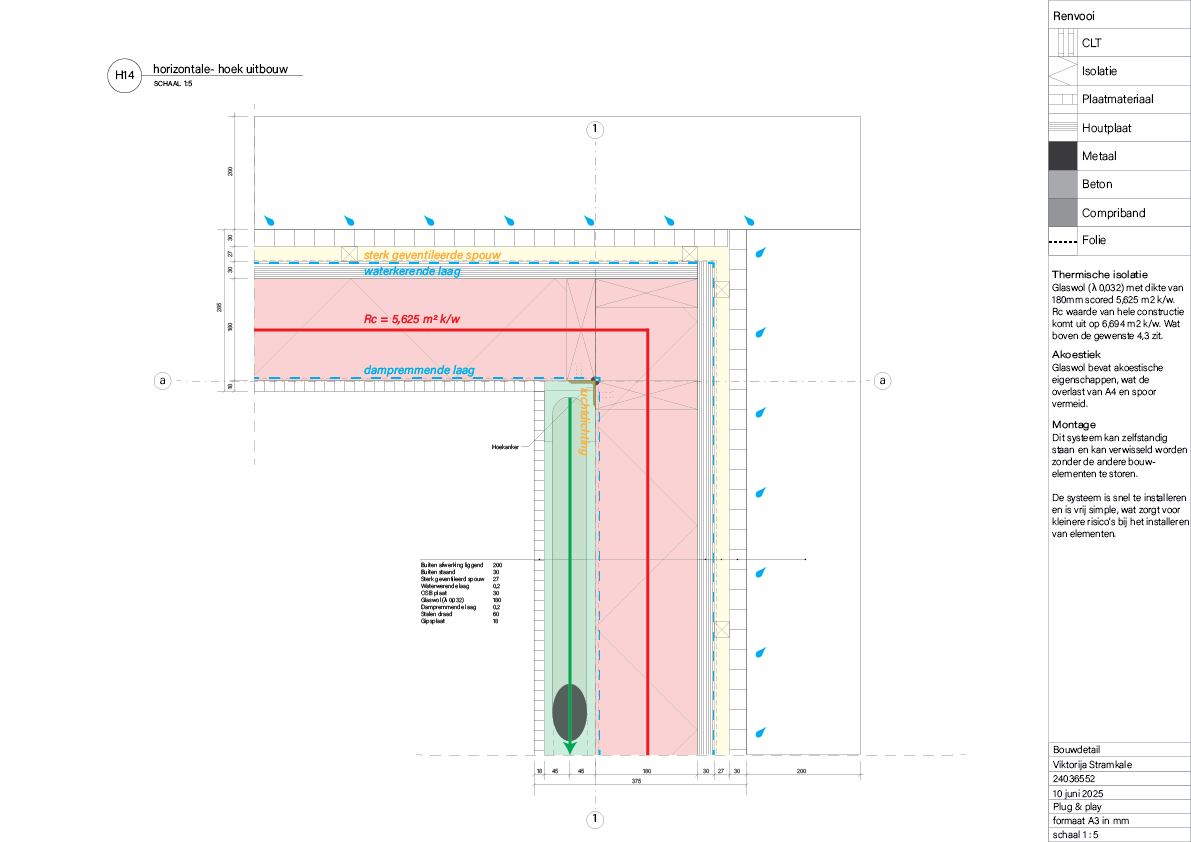
How do we design a stable building assembly that meets Bbl requirements? Which materials should we use, and how do we ensure a safe structure? Within the team, I proposed using timber as the main material. My task was then to further develop the façade build-up. Through sketches and online tools, I designed the façade system. After multiple iterations and a sketch model, we decided to reduce the size of the CLT elements. This adjustment also created an opportunity to effectively seal the gap between elements. The result is a thinner and lighter façade system, allowing for faster and easier installation. It also led to a clear and precise drawing showing how to seal the horizontal gaps between elements. Reducing the façade build-up took time, as we had already invested effort in developing connection details and installation methods.
MODEL
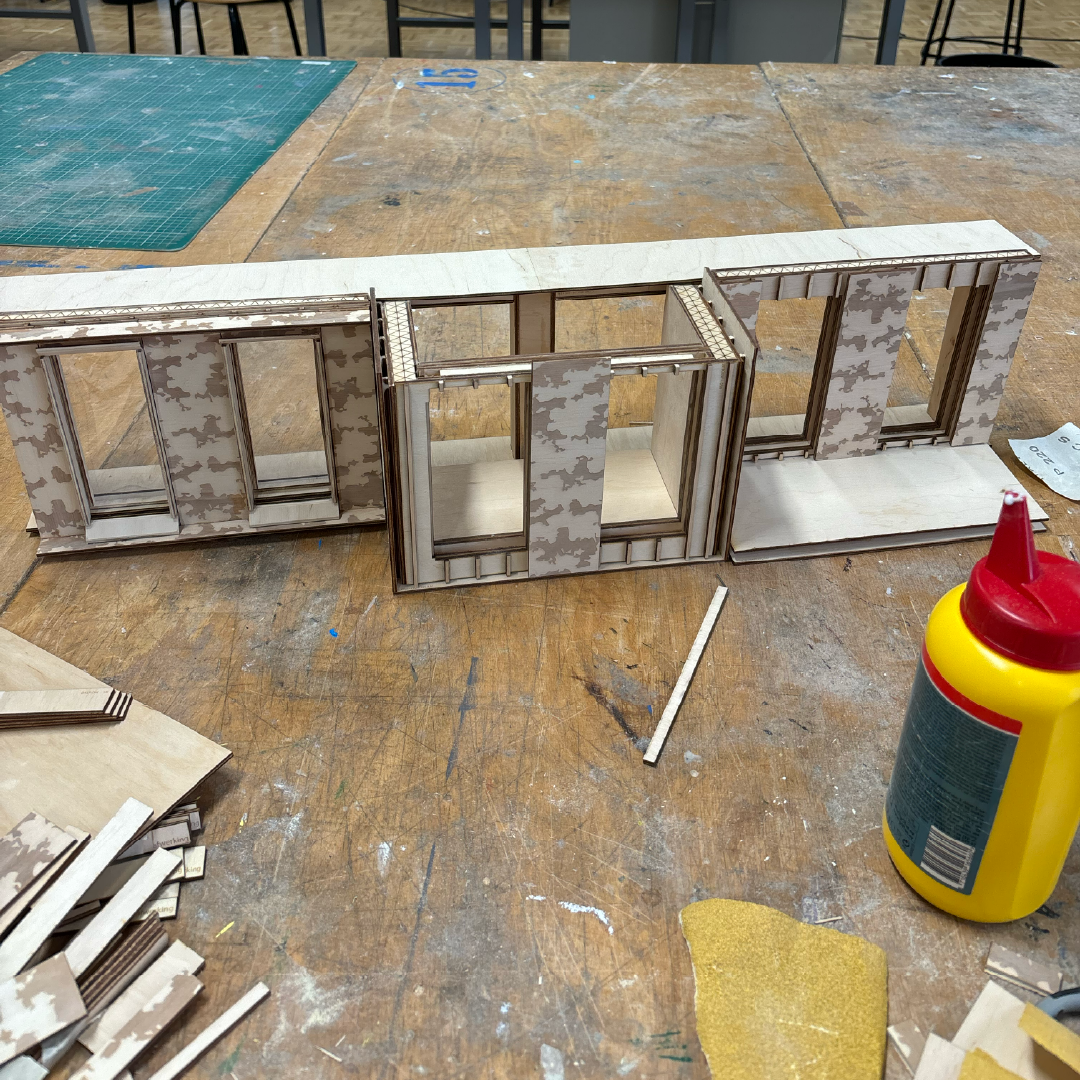
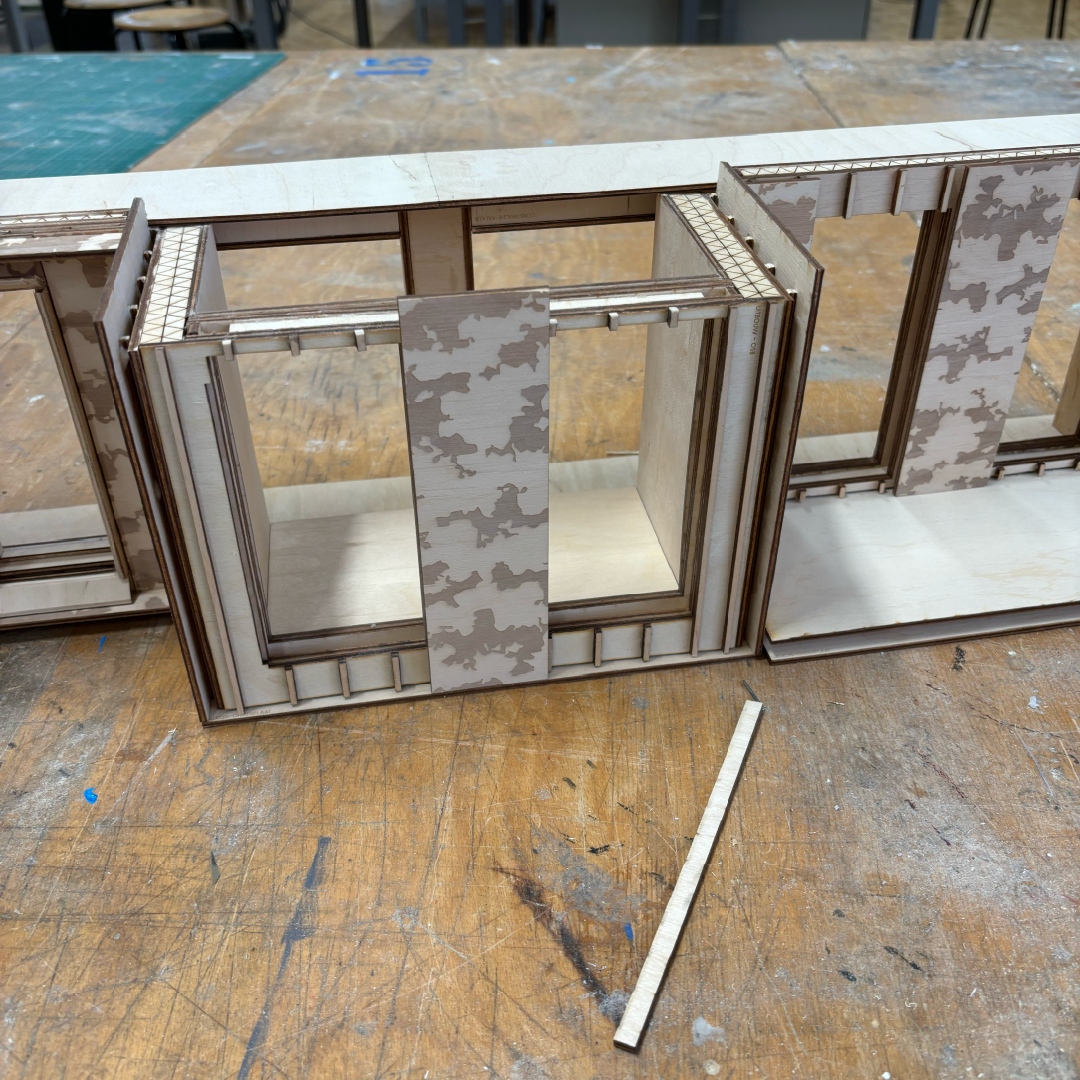
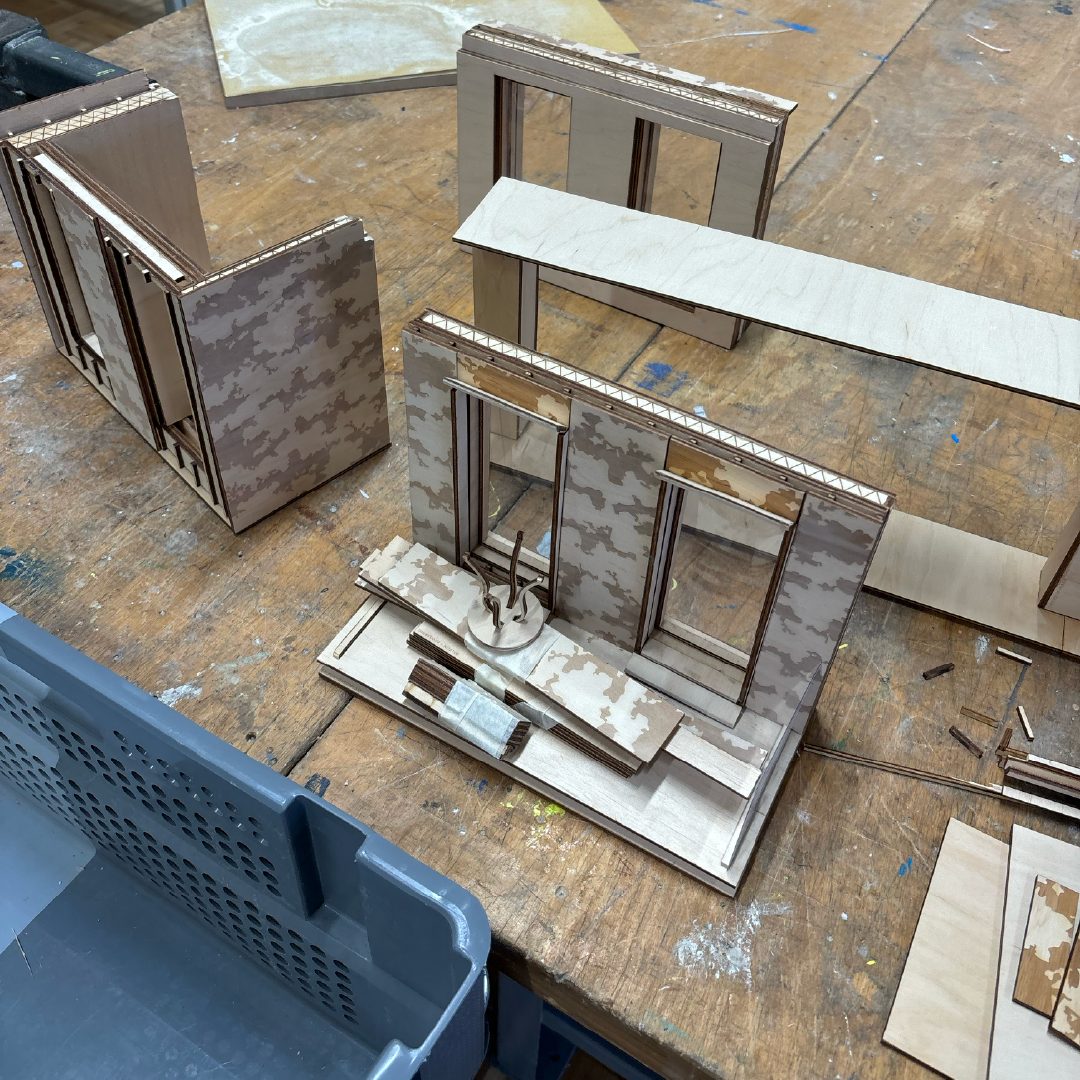
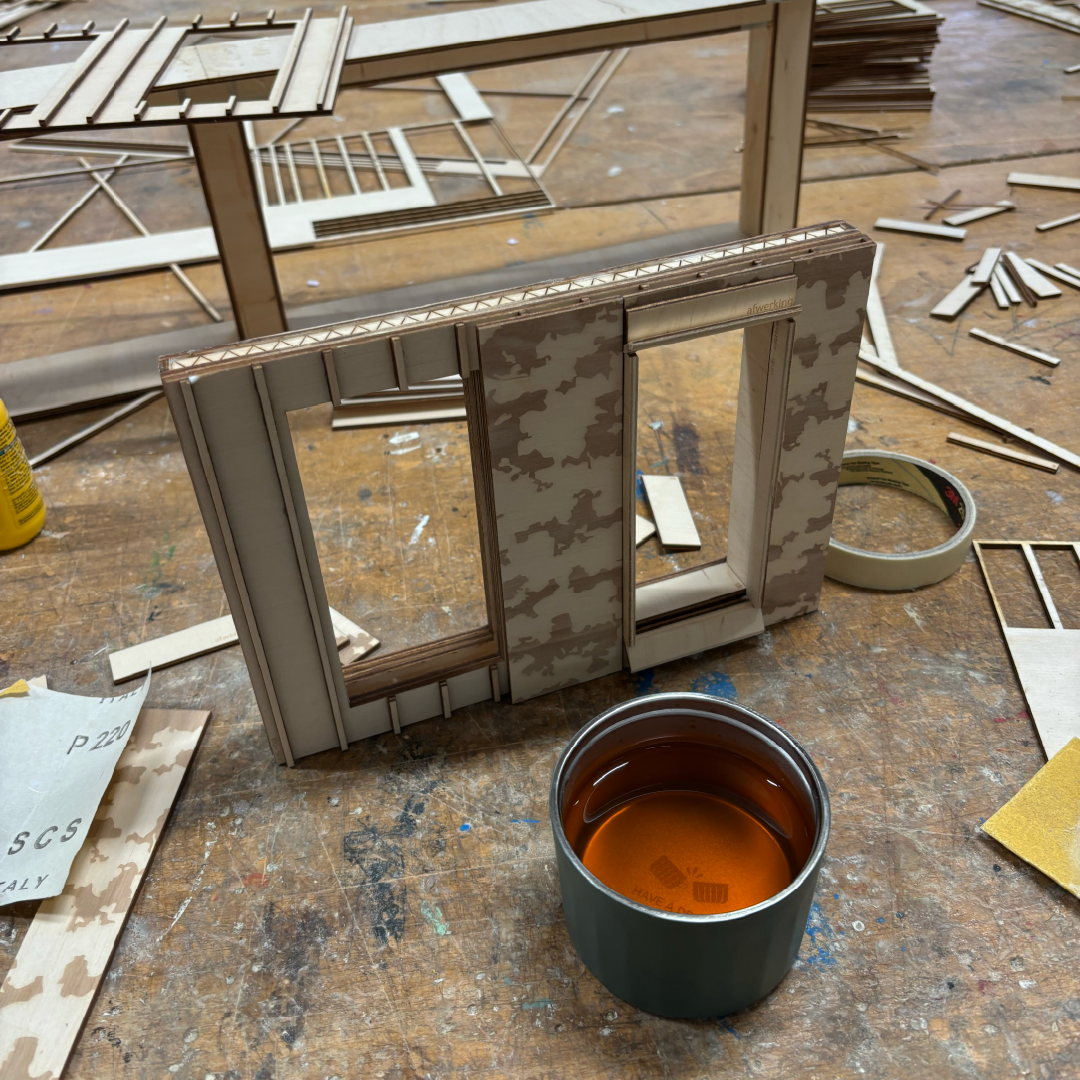
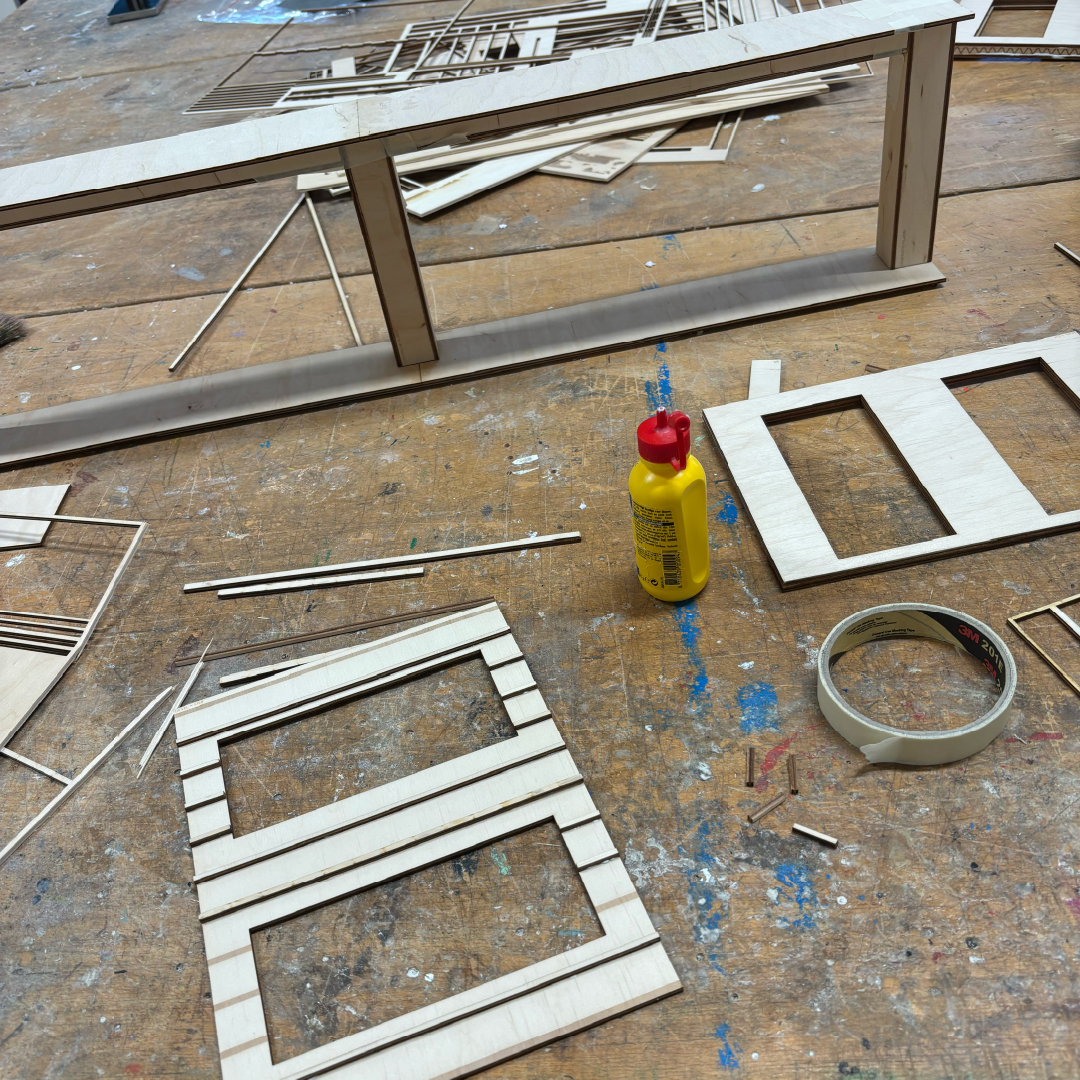
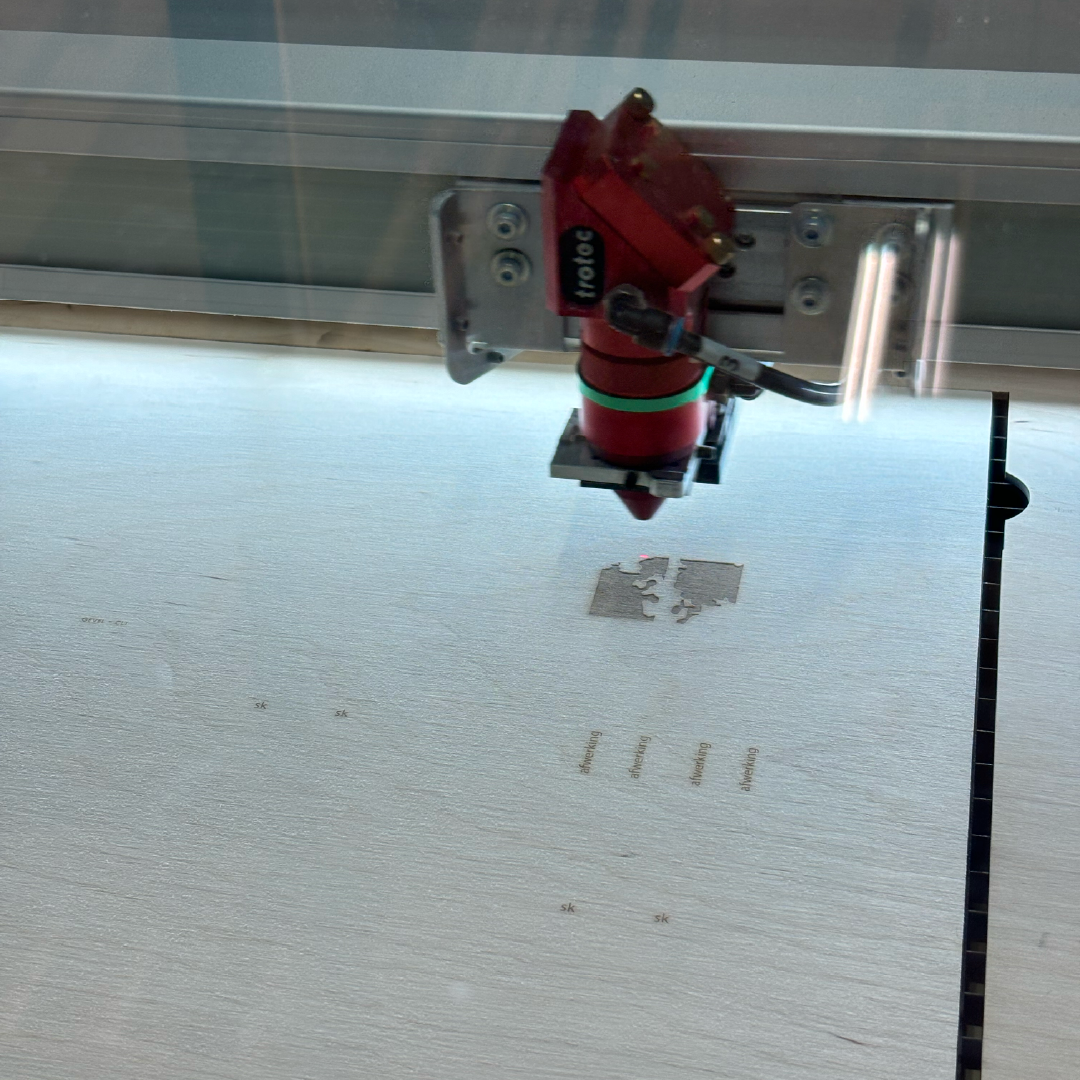
For this project, we were instructed to create a model of each system: the window, wall, and balcony. The process of making the model was challenging, as I aimed to show all details of the element, from insulation to detailed window frames. I used Adobe Illustrator to draw 2D cut plans for the model, ensuring accurate dimensions and scaling it to fit the presentation. The model is adjustable and can be used to demonstrate how it functions and how it would be applied in a real building.